Why Your Local History Society Should Digitise Its Archive
Most local history societies are sitting on a treasure they...
Read More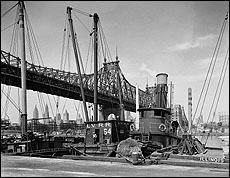
Rephotography: The Art and Craft of Photographing Time
How photographers — from Victorian surveyors to smartphone users —...
Read More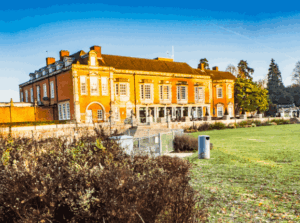
Seeing Through Time: Building GhostViewer and Rediscovering the Stories Hidden in Old Photographs
For as long as I’ve been a photographer, I’ve been...
Read More
Three Essential Reasons Why Photography Websites Need HTML Sitemaps
As a photographer, you’ve mastered the art of visual storytelling,...
Read More
The Evolving World of Microstock for Creators
Defining Microstock and Its Appeal to Artists Microstock refers to...
Read More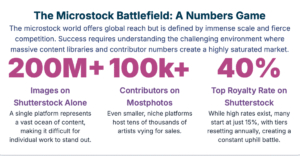
Navigating the Microstock Landscape: Your Contributor’s Guide to Success in 2025
The world of microstock photography and digital asset creation has...
Read More
A Simple Guide to Olympus Digital Camera Model Names
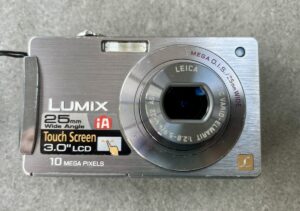
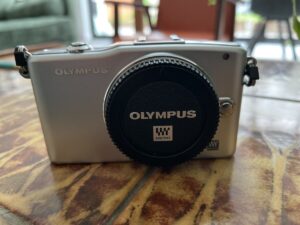
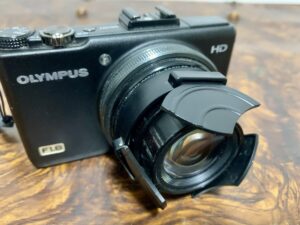
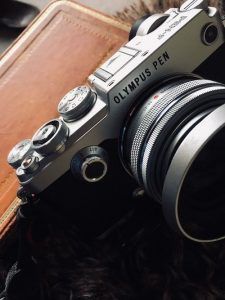
OlympusOlympus introduced its first camera in 1936, the Semi-Olympus I, fitted with the first Zuiko-branded lens. The first innovative camera series from Olympus was the Pen, launched in 1959. The half-frame format, allowing 72 pictures of 18 × 24 mm format on a standard 36-exposure roll of film, made Pen cameras compact and portable for their time. Pixel More has a rich history in camera manufacturing, and their...
Read More
Douglas Levere
Douglas LevereDouglas Levere began rephotographing Berenice Abbott's Changing New York in 1997, returning to her original locations with a large format camera at the same time of day and season. The project had an almost accidental origin: Levere was at an auction preview when he stopped in front of Abbott's vintage contact print of Broadway near Broome Street, photographed in 1935. He lived on Broome Street. Standing in front of an image of the view outside his own building, taken six decades earlier, he found himself compulsively comparing and contrasting — and before long, imagining what his own camera would see from the same spot. What followed was a painstaking effort to recreate not just the locations but the conditions of the original photographs. Levere sourced a camera of the same type Abbott had used, and worked to match the time of year and time of day as precisely as possible. Her photographs were dated, which solved the seasonal question, but finding the exact position, angle, and light proved considerably harder. On one occasion, needing to photograph Fifth Avenue shoppers from a double-decker bus, and unable to get permission from the city to stop in traffic, Levere had the bus driver feign an emergency — placing orange cones on the road and opening the engine hood — in order to hold position long enough to make the exposure at precisely 1:10 PM. Bridge 1 - PHOTO: COURTESY OF THE COLLECTION OF THE MUSEUM OF NEW YORK. PHOTO: DOUGLAS LEVERE Gif created using GhostViewer The resulting book, New York Changing, was published by Princeton Architectural Press in 2004 and drew wide critical attention. Columbia University photographer and educator Thomas Roma wrote that the project would seem bound to collapse under the weight of Abbott's formidable legacy — and that the photographs prove otherwise in every way. The project remains one of the most technically rigorous and culturally resonant examples of rephotography ever produced — a reminder that the discipline, done properly, is as much an act of historical research as it is of photography. [azp_custom_product id="27"] More began rephotographing Berenice Abbott’s Changing New York in 1997, returning to her...
Read More
William Notman
William NotmanWilliam Notman (1826–1891) was a Scottish-born photographer who emigrated to Montreal in 1856 and went on to become one of the most significant documentary photographers in North American history. Working from his studio on Bleury Street — and later from a network of branches across Canada and the United States — Notman built a vast archive of portraits, landscapes, and urban views that amounted to a comprehensive visual record of 19th-century Canadian life. His technical mastery was exceptional: he was among the first photographers to stage elaborate composite photographs, combining separately shot figures against painted backdrops to create scenes that would have been impossible to capture in a single exposure. Major Bell's farm house, Bell Farm (Indian Head, Saskatchewan) (1884) What makes Notman particularly important to the rephotography tradition is the sheer scale and geographical specificity of his output. His Montreal street scenes, river views, and architectural studies were made with the kind of systematic, documentary intent that lends itself naturally to revisitation. When Andrzej Maciejewski rephotographed Notman's Montreal views for the McCord Museum's Urban Life through Two Lenses project in 2002, the precision of Notman's original work — consistent camera heights, carefully chosen vantage points, sharp architectural detail — made precise realignment possible more than a century later. The Notman Photographic Archives, now held by the McCord Stewart Museum in Montreal, contain over 450,000 images and remain one of the most important photographic collections in Canada. More (1826–1891) was a Scottish-born photographer who emigrated to Montreal in 1856...
Read More
William Klein
William KleinWilliam Klein was an American-born French photographer and filmmaker known for his groundbreaking and unconventional approach to both media. Born in New York City in 1928, Klein's career spanned decades, leaving an indelible mark on the world of photography and film. Klein's early life was marked by a diverse range of experiences. He studied sociology at City College of New York and served in the U.S. Army during World War II. After the war, he moved to Paris, where he immersed himself in the city's vibrant artistic scene. He studied painting under the renowned artist Fernand Léger, laying the foundation for his unique visual perspective. Klein's photographic style was revolutionary. He embraced a raw, in-your-face approach, often using wide-angle lenses, unconventional framing, and a grainy aesthetic. He challenged traditional photographic conventions, blurring the lines between art and documentary. His iconic photobook "Life is Good & Good for You in New York" (1956) captured the city's energy and grit with an unprecedented intimacy and immediacy. Beyond photography, Klein also made significant contributions to filmmaking. His films, such as "Who Are You, Polly Maggoo?" (1966) and "Mr. Freedom" (1968), were known for their satirical and experimental nature. More here>> William Klein - books and image [azp_custom_product id="26"] More was an American-born French photographer and filmmaker known for his...
Read More
Martin Parr CBE
Martin Parr CBEMartin Parr CBE (1952) is a British documentary photographer, photojournalist and photobook collector. He is known for his photographic projects that take an intimate, satirical and anthropological look at aspects of modern life, in particular documenting the social classes of England, and more broadly the wealth of the Western world. His major projects have been rural communities (1975–1982), The Last Resort (1983–1985), The Cost of Living (1987–1989), Small World (1987–1994) and Common Sense (1995–1999). The Martin Parr Foundation, founded in 2014, and registered as a charity in 2015 opened premises in his hometown of Bristol in 2017. It houses his own archive, his collection of British and Irish photography by other photographers, and a gallery. Parr’s grandfather encouraged his early interest in photography, and he studied at the Manchester School of Art. In the early 1980s, Parr produced a series of photographs of New Brighton, a run-down seaside resort outside Liverpool. The gaudy and sometimes grotesque imagery of these works seemed to reflect the spirit of Thatcher’s Britain, while echoing the tradition of tacky seaside postcards. More recently, Parr has addressed themes of consumerism, mass tourism and globalisation with a distinctive wit and sense of irony. In Common Sense (1995-9), he uses bright colours and exaggerated close-ups to explore the excesses of contemporary capitalism. Motifs such as heads, hats, hands, food and dogs are repeated throughout, creating a snatched catalogue of our all too familiar shortcomings. Martin Parr TateShots Video https://www.youtube.com/watch?v=kynHilTz_ZM Books and Photo Books - Martin Parr [azp_custom_product id="17"] More (1952) is a British documentary photographer, photojournalist and photobook...
Read More
Chris Killip
Christopher David Killip (11 July 1946 – 13 October 2020) was a...
Read More
Graham Smith
Graham Smith (born 1947) is a photographer from Middlesbrough, England, who was particularly active...
Read More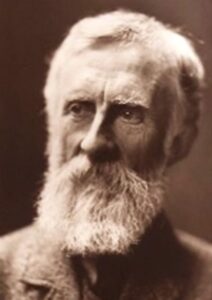
Francis Meadow Sutcliffe
Francis Meadow SutcliffeFrancis Meadow Sutcliffe (1853-1941) was an English photographer known for his captivating images of life in the seaside town of Whitby, England during the late 19th and early 20th centuries. Sutcliffe began his career as a portrait photographer but eventually transitioned to outdoor photography, capturing the everyday lives of the people in Whitby, as well as its stunning landscapes and seascapes.
Sutcliffe's most famous works often featured fishermen, sailors, and their families, showcasing the harsh and rugged lifestyle of those living by the sea. His photographs are characterized by their technical mastery, with a focus on clarity, composition, and natural lighting. Sutcliffe's work has been praised for its ability to truly capture the essence of his subjects and the environment in which they lived. Whitby Photo Walk - a whale of a time in Whitby
Sutcliffe's photographs have been exhibited internationally and are held in numerous museum collections. His work continues to be celebrated for its historical significance and artistic merit, and he is considered one of the most important photographers of the late Victorian and early Edwardian periods. More (1853-1941) was an English photographer known for his captivating...
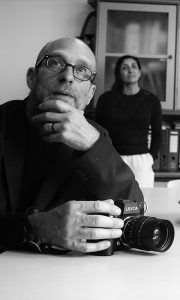
Todd Hido
Todd HidoTodd Hido is a San Francisco Bay Area-based artist whose work has been featured in Artforum, The New York Times Magazine, Eyemazing, Wired, Elephant, FOAM, and Vanity Fair. His photographs are in the permanent collections of the Getty, the Whitney Museum of Art, the Guggenheim Museum, New York, the San Francisco Museum of Modern Art, the de Young, the Smithsonian, the Los Angeles County Museum of Art, and Pier 24 Photography, as well as in many other public and private collections. He has over a dozen published books; his most recent monograph titled Excerpts from Silver Meadows was released in 2013, along with an innovative b-sides box set designed to function as a companion piece to his award-winning monograph in 2014. Aperture will publish his mid-career survey in 2016. - from Todd Hido's website. Hido is currently an adjunct professor at the California College of the Arts in San Francisco. Hido says he is influenced by Alfred Hitchcock, Edward Hopper, Stephen Shore, Robert Adams, Walker Evans, Nan Goldin, Emmet Gowin, Larry Sultan, Alfred Stieglitz, Andreas Gursky and Rineke Dijkstra. Commissioned by Italian brand Bottega Veneta, he photographed actress Lauren Hutton as well as models Joan Smalls and Vittoria Ceretti for the brand's spring/summer 2017 advertisements. One of Todd's most famous collections is House Hunting - available from Amazon Todd Hido's large color photographs of suburbia are lonely, forlorn, mysterious... and strangely comforting. Hido photographs the interior rooms of repossessed tract homes, and the outsides of similar houses at night whose habitation is suggested by the glow of a television set or unseen overhead bulb. Seldom does the similar evoke such melancholy. Yet rather than passing judgment on his anonymous subjects, Hido manages to turn the banal into something beautiful, imbuing his prints of interiors with soft pastels, and allowing the exteriors to glow in the cool evening air.' (From our description of the first printing of 'House Hunting', announced in 2000) We are excited to announce a newly remastered edition of Todd Hido's iconic and highly sought-after first monograph, House Hunting. To celebrate the upcoming 20th anniversary of this important book - certainly one of the most influential and oft-cited photography monographs of our time - we have collaborated closely with the artist to achieve a new impression of the highest possible fidelity. Printed on heavy weight matte art paper, using cutting-edge technologies in both the pre-press and production phases, this new edition of 'House Hunting' stays true to the original design and format while delivering even more accurate color rendition and nuances in tone and saturation. It will be a welcome addition to collections lacking access to the very scarce original printings; and to those fortunate enough to own a copy of the original edition, it further illuminates the images themselves that first catapulted the artist and his first monograph to fame. Other books by Todd Hido available from Amazon You may enjoy looking at a video created by Jamie Windsor that looks at Todd's work -How TODD HIDO creates ATMOSPHERE. Original Todd Hido posters, prints, and more are often available on Etsy More is a San Francisco Bay Area-based artist whose work has...
Read More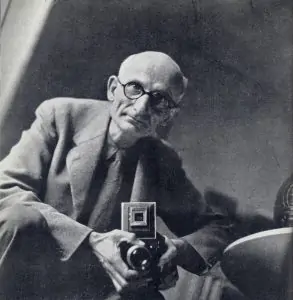
Hugo van Wadenoyen
Hugo van WadenoyenHugo van Wadenoyen (1892 – 1 March 1959 in Cheltenham) was a British photographer, of Dutch origins. He lived in Cheltenham England, and was an influential figure in the long drawn-out genesis of British fine art photography, especially in the 1945–1965 period. Van Wadenoyen led the « Combined Societies »; a progressive group of local photographic societies (Hereford, Wolverhampton, and Bristol) that, in 1945, broke away from the moribund Royal Photographic Society. He undertook a series of instructional books on photography, published by the Focal Press. Van Wadenoyen’s book Wayside Snapshots (Focal Press, 1947) marked a decisive British break with Pictorialism in photography, was a brave early attempt to use the book format as a means of showing a photographer’s personal pictures. Some of the book’s fresh approaches to landscape strongly influenced Raymond Moore. Van Wadenoyen was also a mentor to Roger Mayne, involving Mayne in the Combined Societies group exhibitions between 1951 and 1955. Photos that he took with a Purma camera were used in Purma camera manuals and Focal guides. [azp_custom_product id="29"] More (1892 – 1 March 1959 in Cheltenham) was a...
Read More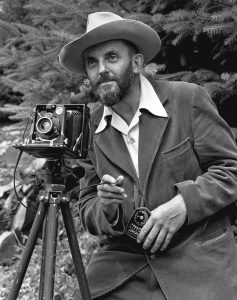
Ansel Adams
Ansel AdamsAnsel Adams was an American photographer who specialised in the black-and-white photography of rural landscapes. He was an environmental activist and one of the pioneers of modern nature photography. More was an American photographer who specialised in the black-and-white photography...
Read More
David Bailey
David Royston Bailey CBE (born 2 January 1938) is an English photographer...
Read More
Jamie Windsor
Having worked for over 10 years as a graphic designer in London,...
Read More



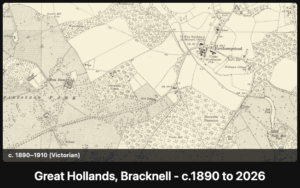
See Through Time – GhostViewer Map Gif Creation Tool
Create a free animated GIF comparing Victorian, WWII, and modern...
Read More
Sam Gibson Wedding Photography
Hi, I’m Sam Gibson – a professional wedding photographer based...
Read More
Ruchika Jain Photography
Ruchika Jain Photography is a professional Wellington photographer and has...
Read More
Repeat Photography Project – USGS
Repeat photography provides objective visual evidence of landscape change. USGS...
Read More
New York Changing: Douglas Levere
New York Changing: Douglas LevereDouglas Levere began rephotographing Berenice Abbott's Changing New York in 1997, returning to her original locations with a large format camera at the same time of day and season. The project had an almost accidental origin: Levere was at an auction preview when he stopped in front of Abbott's vintage contact print of Broadway near Broome Street, photographed in 1935. He lived on Broome Street. Standing in front of an image of the view outside his own building, taken six decades earlier, he found himself compulsively comparing and contrasting — and before long, imagining what his own camera would see from the same spot. What followed was a painstaking effort to recreate not just the locations but the conditions of the original photographs. Levere sourced a camera of the same type Abbott had used, and worked to match the time of year and time of day as precisely as possible. Her photographs were dated, which solved the seasonal question, but finding the exact position, angle, and light proved considerably harder. On one occasion, needing to photograph Fifth Avenue shoppers from a double-decker bus, and unable to get permission from the city to stop in traffic, Levere had the bus driver feign an emergency — placing orange cones on the road and opening the engine hood — in order to hold position long enough to make the exposure at precisely 1:10 PM. Bridge 1 - PHOTO: COURTESY OF THE COLLECTION OF THE MUSEUM OF NEW YORK. PHOTO: DOUGLAS LEVERE Gif created using GhostViewer The resulting book, New York Changing, was published by Princeton Architectural Press in 2004 and drew wide critical attention. Columbia University photographer and educator Thomas Roma wrote that the project would seem bound to collapse under the weight of Abbott's formidable legacy — and that the photographs prove otherwise in every way. The project remains one of the most technically rigorous and culturally resonant examples of rephotography ever produced — a reminder that the discipline, done properly, is as much an act of historical research as it is of photography. [azp_custom_product id="27"] More Revisits Berenice Abbott’s New York...
Read More
The Third View Project (Mark Klett)
Third View added a third image to the pairs made...
Read MoreTime-Travel Rephotography
Many historical people were only ever captured by old, faded,...
Read More
Time After Time – Mark Hersch
My work spans two dimensions – the dimensions of space...
Read More