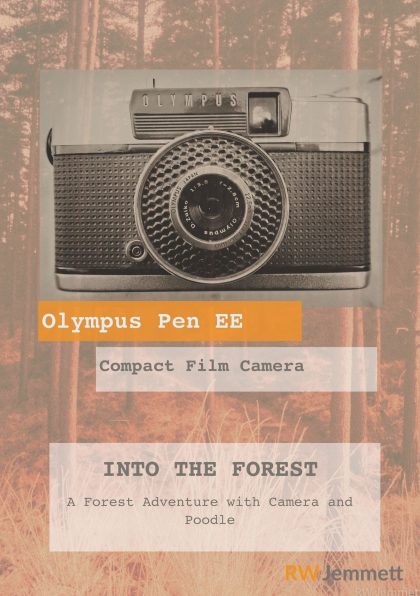
The Pen EE-2 was produced from 1968 to 1977 and is nearly the same as the Pen EE. The main changes are the addition of a hot shoeA camera hot shoe is a metal bracket on the top of a camera that allows various accessories to be attached, such as external flashes, microphones, and other equipment. These accessories typically have a matching "foot" that slides into the hot shoe and makes a secure connection for communication and power transfer. They are used to connect flash guns, flash triggers, microphones (although the connections are usually not used and the microphone uses a microphone port), digital viewfinder, etc. More and an automatic exposureThe amount of light that reaches the film (or camera sensor). It determines how light or dark an image is. The exposure of an image is determined by the aperture, shutter speed, and film speed (ISO). During exposure, the sensors or chemicals on the film in analogue models, are subjected to the light outside the camera for a certain time. More counter. The film speed range (ISOInternational Organization for Standardization represents the film’s (or sensors) sensitivity to the light. The higher the number, the more information will be captured. 400 ISO film is more sensitive to light than 200 ISO film by 1 stop./ASA) was changed to reflect more modern emulsions with a range from 25-400 ISOInternational Organization for Standardization represents the film’s (or sensors) sensitivity to the light. The higher the number, the more information will be captured. 400 ISO film is more sensitive to light than 200 ISO film by 1 stop.. ShutterEither mechanical and/or electronic shutters are possible. Mechanical systems can use a leaf (or iris) shutter or curtain shutter. In digital cameras a third alternative is also possible: the electronic shutter. This works by activating and then deactivating the CCD so that no further light can be recorded, regardless of whether light is hitting the CCD. The shutter controls the exposure time, which can range from thousandths of a second to several minutes or more. Fast shutter speeds freeze action, slow speeds are more suited to stationary subjects. A tripod is recommended for slow exposure shots to avoid camera shake, or IBIS. More speeds also improved to 1/200 and 1/40th of a second (compared to 1/250 and 1/30th in the EE). The EE-2 could only accommodate the larger (43.5mm) lens filters.
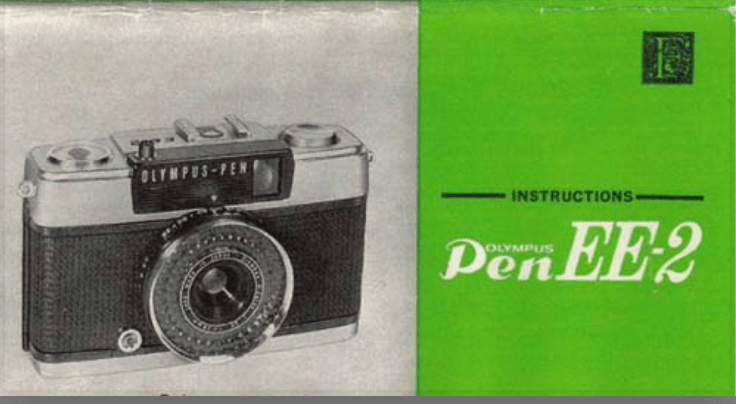
Olympus Pen EE-2 Manual 1968-77 Camera Manual for Instant Digital Download
£0.55
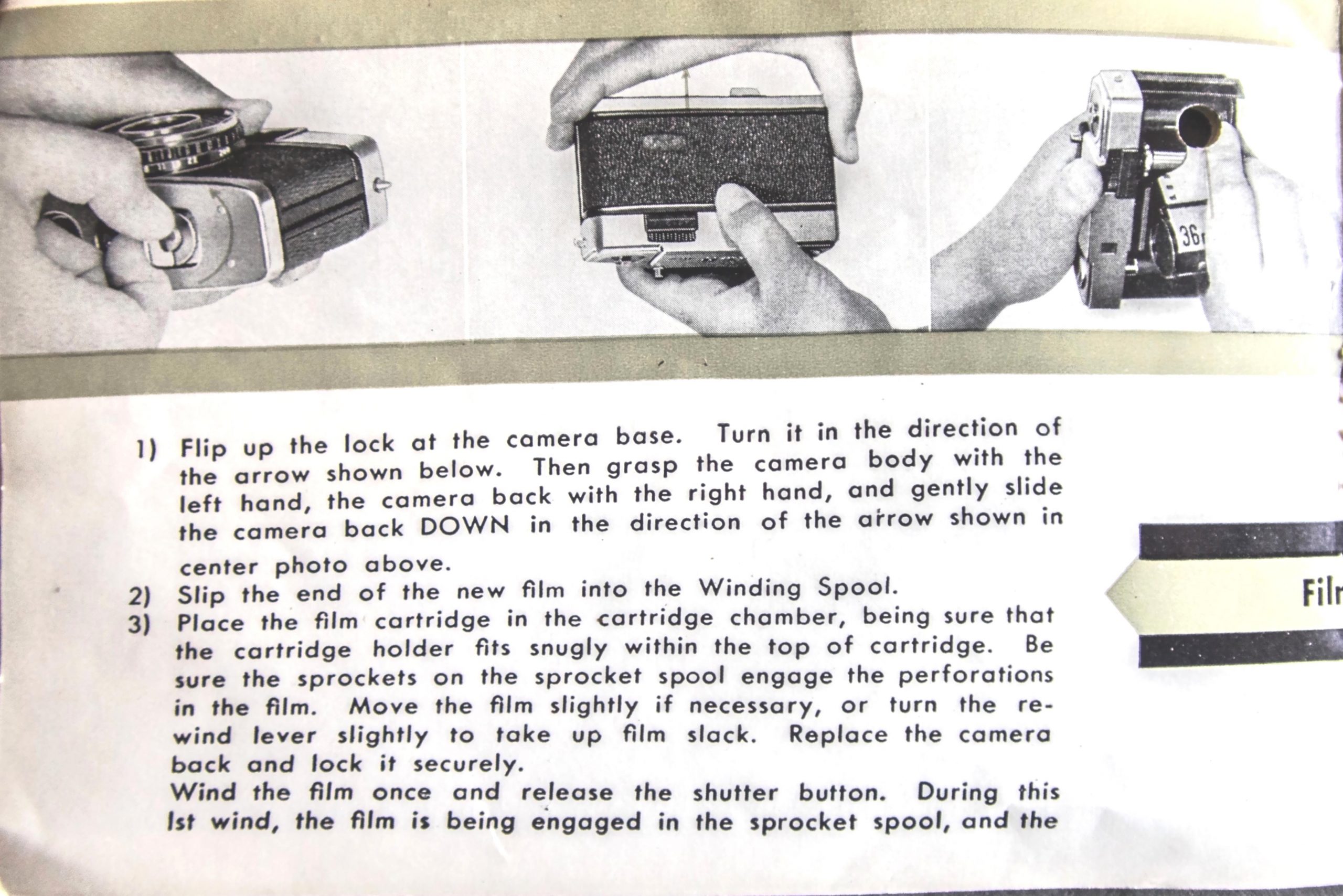
Colour scanned copy of the manual to read online or print. The download is a PDF. This has not been re-formatted and some areas are not of the highest quality. But it will be very handy in understanding how best to use the wonderful Olympus Pen EE-2.