

Film Tested PurmaTom Purvis, a renowned artist, and Alfred C. Mayo founded Purma Cameras Ltd. in 1935. David Brock of Brock Fireworks gave financial help to launch the company in London. Their office was at Brock House, Langham St, London W1. (Tom Purvis is perhaps better known as a commercial artist who was responsible for many of the great LNER Railway posters of the 1930s.) More Plus 127 film camera (the books was written partly from the experience of using this camera). Leather case and one copy of The PurmaTom Purvis, a renowned artist, and Alfred C. Mayo founded Purma Cameras Ltd. in 1935. David Brock of Brock Fireworks gave financial help to launch the company in London. Their office was at Brock House, Langham St, London W1. (Tom Purvis is perhaps better known as a commercial artist who was responsible for many of the great LNER Railway posters of the 1930s.) More Camera Book. The camera uses 127 film and produces square images.
>About the PurmaTom Purvis, a renowned artist, and Alfred C. Mayo founded Purma Cameras Ltd. in 1935. David Brock of Brock Fireworks gave financial help to launch the company in London. Their office was at Brock House, Langham St, London W1. (Tom Purvis is perhaps better known as a commercial artist who was responsible for many of the great LNER Railway posters of the 1930s.) More Plus :
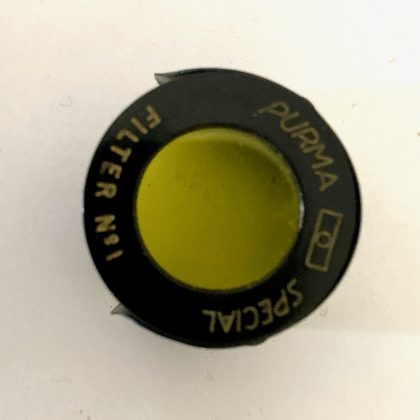
The PurmaTom Purvis, a renowned artist, and Alfred C. Mayo founded Purma Cameras Ltd. in 1935. David Brock of Brock Fireworks gave financial help to launch the company in London. Their office was at Brock House, Langham St, London W1. (Tom Purvis is perhaps better known as a commercial artist who was responsible for many of the great LNER Railway posters of the 1930s.) More Plus was introduced in 1951, costing £12 and manufactured to c. 1959 it has an all metal body and is significantly more heavy than the Special. Once again there was a range of accessories available including a case, lens hood and lens filters. The PurmaTom Purvis, a renowned artist, and Alfred C. Mayo founded Purma Cameras Ltd. in 1935. David Brock of Brock Fireworks gave financial help to launch the company in London. Their office was at Brock House, Langham St, London W1. (Tom Purvis is perhaps better known as a commercial artist who was responsible for many of the great LNER Railway posters of the 1930s.) More Plus also has a cold shoe for attaching a flash, unlike the earlier cameras. Other features included direct-vision view-finder that blacks out when film is not advanced. The film advance is also coupled to the shutterEither mechanical and/or electronic shutters are possible. Mechanical systems can use a leaf (or iris) shutter or curtain shutter. In digital cameras a third alternative is also possible: the electronic shutter. This works by activating and then deactivating the CCD so that no further light can be recorded, regardless of whether light is hitting the CCD. The shutter controls the exposure time, which can range from thousandths of a second to several minutes or more. Fast shutter speeds freeze action, slow speeds are more suited to stationary subjects. A tripod is recommended for slow exposure shots to avoid camera shake, or IBIS. More eliminating the possibility of a double exposureThe amount of light that reaches the film (or camera sensor). It determines how light or dark an image is. The exposure of an image is determined by the aperture, shutter speed, and film speed (ISO). During exposure, the sensors or chemicals on the film in analogue models, are subjected to the light outside the camera for a certain time. More. (Whilst this for many people would be a positive and ensure that exposures were not spoiled, some people may have wished to experiment with double exposureThe amount of light that reaches the film (or camera sensor). It determines how light or dark an image is. The exposure of an image is determined by the aperture, shutter speed, and film speed (ISO). During exposure, the sensors or chemicals on the film in analogue models, are subjected to the light outside the camera for a certain time. More photos). About 19,000 cameras were manufactured.
>PurmaTom Purvis, a renowned artist, and Alfred C. Mayo founded Purma Cameras Ltd. in 1935. David Brock of Brock Fireworks gave financial help to launch the company in London. Their office was at Brock House, Langham St, London W1. (Tom Purvis is perhaps better known as a commercial artist who was responsible for many of the great LNER Railway posters of the 1930s.) More Plus Specification:
Weight: Excluding case and additional lenses – c. 700g
Lens: f6.3, 55 mm PurmaTom Purvis, a renowned artist, and Alfred C. Mayo founded Purma Cameras Ltd. in 1935. David Brock of Brock Fireworks gave financial help to launch the company in London. Their office was at Brock House, Langham St, London W1. (Tom Purvis is perhaps better known as a commercial artist who was responsible for many of the great LNER Railway posters of the 1930s.) More AnastigmatAn anastigmat lens is one in which all optical defects, including astigmatism, have been corrected in the design. The first of this kind, the Protar lens, designed by Paul Rudolph, was introduced by Zeiss in 1889. All modern lenses are anastigmats, so the definition for modern cameras and lenses has become redundant. More. Fixed apertureThe aperture is basically a hole in the camera’s lens that lets light pass through it to the shutter and ultimately the film or censor. The aperture not only influences picture brightness but also regulates depth of focus. Most cameras are equipped with an iris aperture that can be freely adjusted or set according to pre-selected values. More. Coated.
Focusing: Fixed 12 feet to infinity.
ShutterEither mechanical and/or electronic shutters are possible. Mechanical systems can use a leaf (or iris) shutter or curtain shutter. In digital cameras a third alternative is also possible: the electronic shutter. This works by activating and then deactivating the CCD so that no further light can be recorded, regardless of whether light is hitting the CCD. The shutter controls the exposure time, which can range from thousandths of a second to several minutes or more. Fast shutter speeds freeze action, slow speeds are more suited to stationary subjects. A tripod is recommended for slow exposure shots to avoid camera shake, or IBIS. More: Metal guillotine shutterEither mechanical and/or electronic shutters are possible. Mechanical systems can use a leaf (or iris) shutter or curtain shutter. In digital cameras a third alternative is also possible: the electronic shutter. This works by activating and then deactivating the CCD so that no further light can be recorded, regardless of whether light is hitting the CCD. The shutter controls the exposure time, which can range from thousandths of a second to several minutes or more. Fast shutter speeds freeze action, slow speeds are more suited to stationary subjects. A tripod is recommended for slow exposure shots to avoid camera shake, or IBIS. More near the focal plane comprising two metal plates that slide together across the film gate.
ShutterEither mechanical and/or electronic shutters are possible. Mechanical systems can use a leaf (or iris) shutter or curtain shutter. In digital cameras a third alternative is also possible: the electronic shutter. This works by activating and then deactivating the CCD so that no further light can be recorded, regardless of whether light is hitting the CCD. The shutter controls the exposure time, which can range from thousandths of a second to several minutes or more. Fast shutter speeds freeze action, slow speeds are more suited to stationary subjects. A tripod is recommended for slow exposure shots to avoid camera shake, or IBIS. More Speeds: Three speeds 1/25, 1/150, 1/500. Spring powered, separate capping blade. Speeds varied by the position of a brass cam which changes the slit width by acting on the second (following) plate. The cam is free to rotate, the position of the camera determines the position of the cam and so the slit width. Flash synchronisation.
Construction: Metal body – aluminium
Format: 16, 1 ¼” x 1 ¼” exposures on 127 roll-film. Curved film plane.
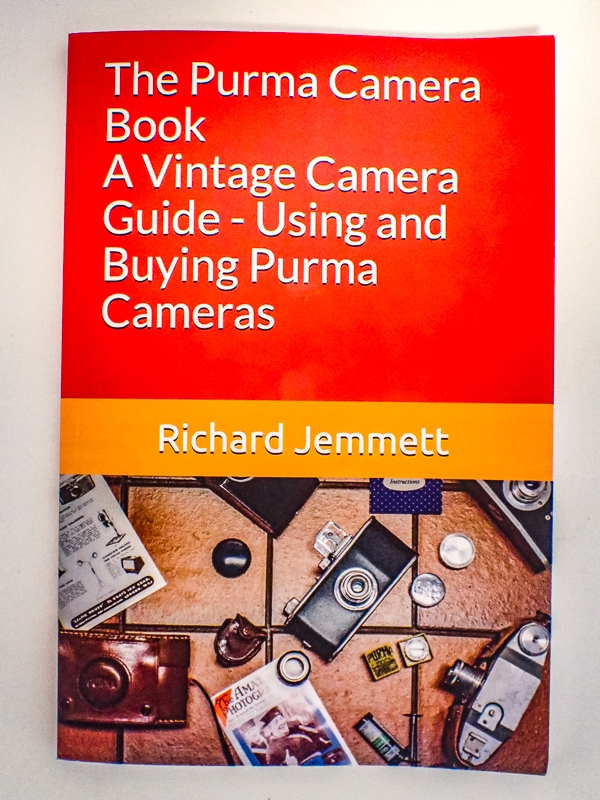
>About the book, The PurmaTom Purvis, a renowned artist, and Alfred C. Mayo founded Purma Cameras Ltd. in 1935. David Brock of Brock Fireworks gave financial help to launch the company in London. Their office was at Brock House, Langham St, London W1. (Tom Purvis is perhaps better known as a commercial artist who was responsible for many of the great LNER Railway posters of the 1930s.) More Camera Guide.
Picking up a camera that is 50 or more years old, understanding how it works, using it in the field and obtaining a set of unique photographs can be very rewarding. There are many how to books whether they are original camera manuals or photography technique books, but I found few books that help a photographer get the most from using old and vintage cameras in today’s world.
I chose to use PurmaTom Purvis, a renowned artist, and Alfred C. Mayo founded Purma Cameras Ltd. in 1935. David Brock of Brock Fireworks gave financial help to launch the company in London. Their office was at Brock House, Langham St, London W1. (Tom Purvis is perhaps better known as a commercial artist who was responsible for many of the great LNER Railway posters of the 1930s.) More cameras as they are a somewhat eccentric series of cameras, relatively easy to use and readily available at a reasonable price from auction sites, car boot fairs, Facebook Marketplace, etc. The shutterEither mechanical and/or electronic shutters are possible. Mechanical systems can use a leaf (or iris) shutter or curtain shutter. In digital cameras a third alternative is also possible: the electronic shutter. This works by activating and then deactivating the CCD so that no further light can be recorded, regardless of whether light is hitting the CCD. The shutter controls the exposure time, which can range from thousandths of a second to several minutes or more. Fast shutter speeds freeze action, slow speeds are more suited to stationary subjects. A tripod is recommended for slow exposure shots to avoid camera shake, or IBIS. More mechanism, lens and body are all simple and it is therefore usually possible to understand whether a PurmaTom Purvis, a renowned artist, and Alfred C. Mayo founded Purma Cameras Ltd. in 1935. David Brock of Brock Fireworks gave financial help to launch the company in London. Their office was at Brock House, Langham St, London W1. (Tom Purvis is perhaps better known as a commercial artist who was responsible for many of the great LNER Railway posters of the 1930s.) More camera is usable upon first inspection. The only issue that photographers may need to navigate is the supply of 127 film. It is available from some film suppliers or sourced by adapting 120 film. This book is a compilation of information from several out of print publications, web resources and my own observations and experience of using PurmaTom Purvis, a renowned artist, and Alfred C. Mayo founded Purma Cameras Ltd. in 1935. David Brock of Brock Fireworks gave financial help to launch the company in London. Their office was at Brock House, Langham St, London W1. (Tom Purvis is perhaps better known as a commercial artist who was responsible for many of the great LNER Railway posters of the 1930s.) More cameras. I have taken the opportunity to update both the content and grammar of the out of print publications to make them more readable and helpful to photographers using a vintage camera in the twenty twenties.
The PurmaTom Purvis, a renowned artist, and Alfred C. Mayo founded Purma Cameras Ltd. in 1935. David Brock of Brock Fireworks gave financial help to launch the company in London. Their office was at Brock House, Langham St, London W1. (Tom Purvis is perhaps better known as a commercial artist who was responsible for many of the great LNER Railway posters of the 1930s.) More Camera Guide is available as a Paperback and a Kindle ebook
Source printed materials:
Focal Press – The PurmaTom Purvis, a renowned artist, and Alfred C. Mayo founded Purma Cameras Ltd. in 1935. David Brock of Brock Fireworks gave financial help to launch the company in London. Their office was at Brock House, Langham St, London W1. (Tom Purvis is perhaps better known as a commercial artist who was responsible for many of the great LNER Railway posters of the 1930s.) More Guide (1952)
PurmaTom Purvis, a renowned artist, and Alfred C. Mayo founded Purma Cameras Ltd. in 1935. David Brock of Brock Fireworks gave financial help to launch the company in London. Their office was at Brock House, Langham St, London W1. (Tom Purvis is perhaps better known as a commercial artist who was responsible for many of the great LNER Railway posters of the 1930s.) More Cameras – PurmaTom Purvis, a renowned artist, and Alfred C. Mayo founded Purma Cameras Ltd. in 1935. David Brock of Brock Fireworks gave financial help to launch the company in London. Their office was at Brock House, Langham St, London W1. (Tom Purvis is perhaps better known as a commercial artist who was responsible for many of the great LNER Railway posters of the 1930s.) More Special instruction manual
PurmaTom Purvis, a renowned artist, and Alfred C. Mayo founded Purma Cameras Ltd. in 1935. David Brock of Brock Fireworks gave financial help to launch the company in London. Their office was at Brock House, Langham St, London W1. (Tom Purvis is perhaps better known as a commercial artist who was responsible for many of the great LNER Railway posters of the 1930s.) More Cameras – PurmaTom Purvis, a renowned artist, and Alfred C. Mayo founded Purma Cameras Ltd. in 1935. David Brock of Brock Fireworks gave financial help to launch the company in London. Their office was at Brock House, Langham St, London W1. (Tom Purvis is perhaps better known as a commercial artist who was responsible for many of the great LNER Railway posters of the 1930s.) More Plus instruction manual
PurmaTom Purvis, a renowned artist, and Alfred C. Mayo founded Purma Cameras Ltd. in 1935. David Brock of Brock Fireworks gave financial help to launch the company in London. Their office was at Brock House, Langham St, London W1. (Tom Purvis is perhaps better known as a commercial artist who was responsible for many of the great LNER Railway posters of the 1930s.) More Cameras – PurmaTom Purvis, a renowned artist, and Alfred C. Mayo founded Purma Cameras Ltd. in 1935. David Brock of Brock Fireworks gave financial help to launch the company in London. Their office was at Brock House, Langham St, London W1. (Tom Purvis is perhaps better known as a commercial artist who was responsible for many of the great LNER Railway posters of the 1930s.) More Speed instruction manual
Also includes:
The PurmaTom Purvis, a renowned artist, and Alfred C. Mayo founded Purma Cameras Ltd. in 1935. David Brock of Brock Fireworks gave financial help to launch the company in London. Their office was at Brock House, Langham St, London W1. (Tom Purvis is perhaps better known as a commercial artist who was responsible for many of the great LNER Railway posters of the 1930s.) More Camera Company history & marketing
Using the PurmaTom Purvis, a renowned artist, and Alfred C. Mayo founded Purma Cameras Ltd. in 1935. David Brock of Brock Fireworks gave financial help to launch the company in London. Their office was at Brock House, Langham St, London W1. (Tom Purvis is perhaps better known as a commercial artist who was responsible for many of the great LNER Railway posters of the 1930s.) More Special & PurmaTom Purvis, a renowned artist, and Alfred C. Mayo founded Purma Cameras Ltd. in 1935. David Brock of Brock Fireworks gave financial help to launch the company in London. Their office was at Brock House, Langham St, London W1. (Tom Purvis is perhaps better known as a commercial artist who was responsible for many of the great LNER Railway posters of the 1930s.) More Plus
Photos taken with PurmaTom Purvis, a renowned artist, and Alfred C. Mayo founded Purma Cameras Ltd. in 1935. David Brock of Brock Fireworks gave financial help to launch the company in London. Their office was at Brock House, Langham St, London W1. (Tom Purvis is perhaps better known as a commercial artist who was responsible for many of the great LNER Railway posters of the 1930s.) More Cameras
Appendices