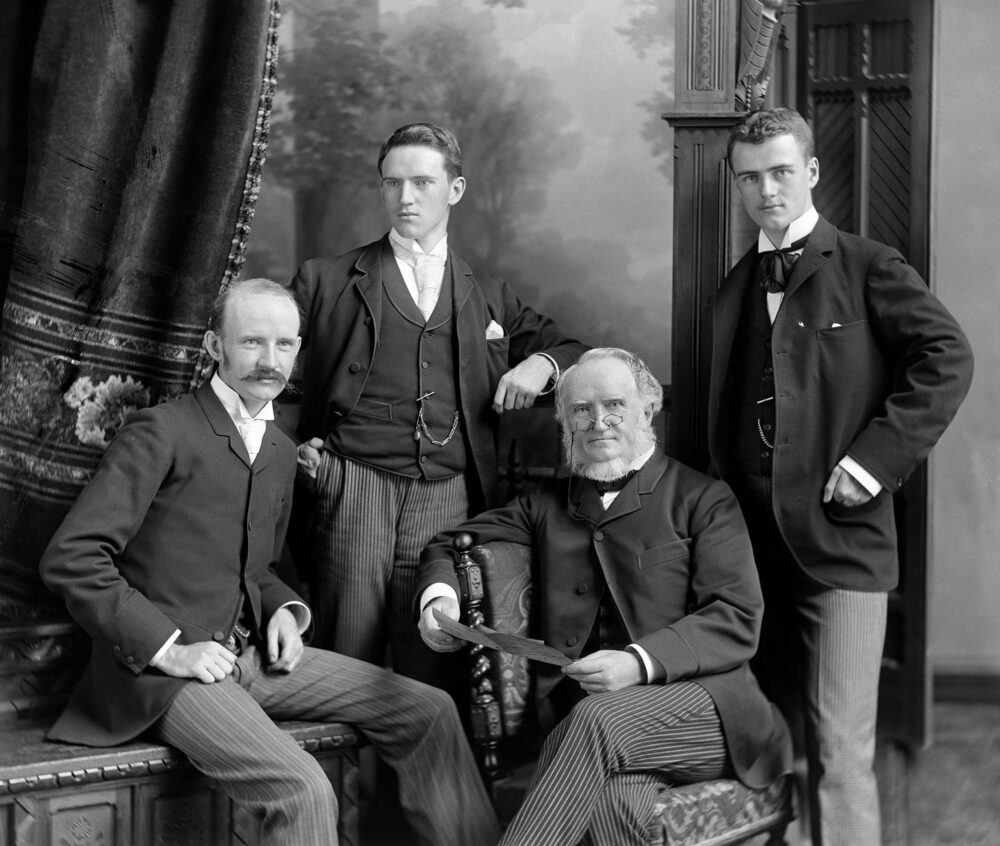
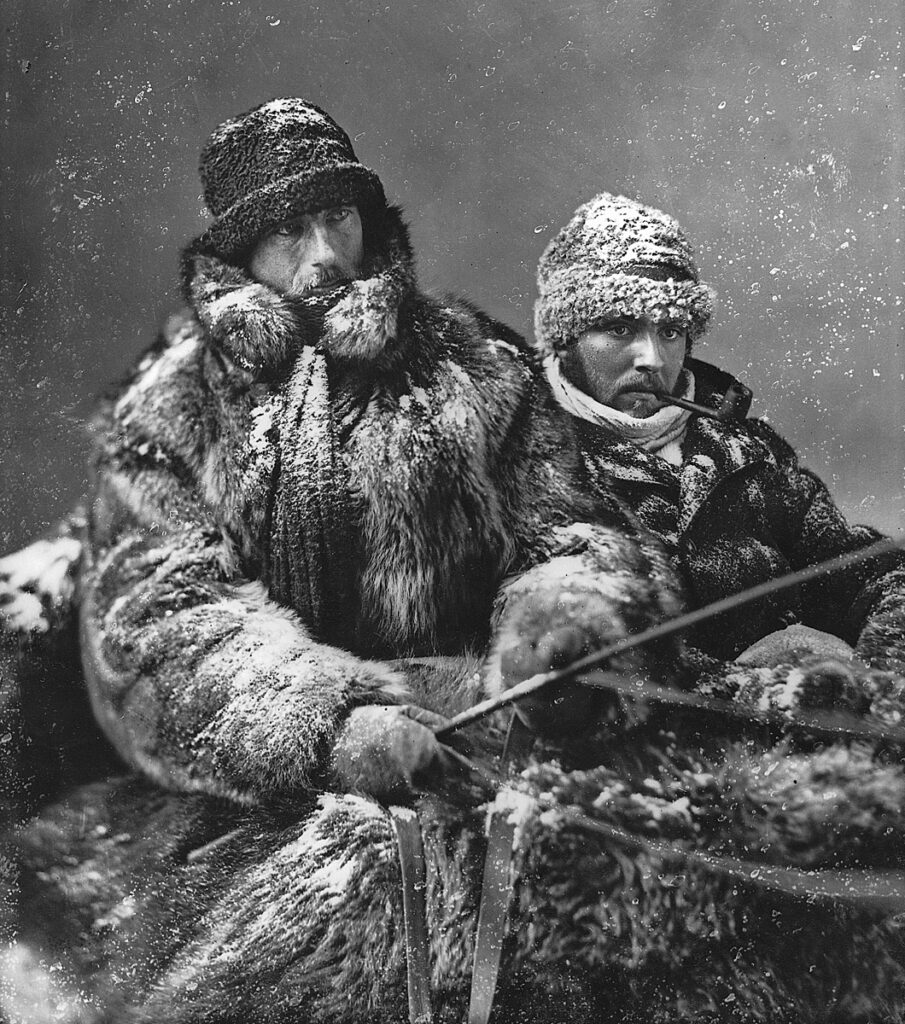
William Notman (1826–1891) was a Scottish-born photographer who emigrated to Montreal in 1856 and went on to become one of the most significant documentary photographers in North American history. Working from his studio on Bleury Street — and later from a network of branches across Canada and the United States — Notman built a vast archive of portraits, landscapes, and urban views that amounted to a comprehensive visual record of 19th-century Canadian life. His technical mastery was exceptional: he was among the first photographers to stage elaborate composite photographs, combining separately shot figures against painted backdrops to create scenes that would have been impossible to capture in a single exposureThe amount of light that reaches the film (or camera sensor). It determines how light or dark an image is. The exposure of an image is determined by the aperture, shutter speed, and film speed (ISO). During exposure, the sensors or chemicals on the film in analogue models, are subjected to the light outside the camera for a certain time. More.
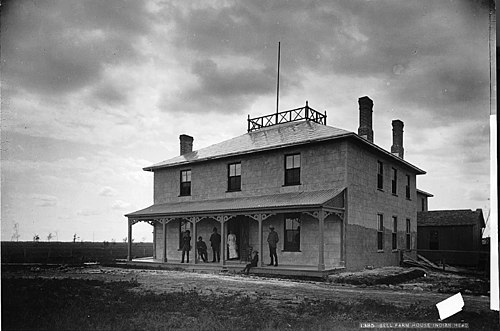
What makes Notman particularly important to the rephotographyRephotography — sometimes called repeat photography — is the practice of photographing the same location from the same position on two or more separate occasions, with a significant time gap between images. The objective is a direct visual comparison: a diachronic pair that shows what has changed, what has survived, and what has been lost entirely. Read the Post - The Art and Craft of Photographing Time. Rephotography Organisations and Information More tradition is the sheer scale and geographical specificity of his output. His Montreal street scenes, river views, and architectural studies were made with the kind of systematic, documentary intent that lends itself naturally to revisitation. When Andrzej Maciejewski rephotographed Notman’s Montreal views for the McCord Museum’s Urban Life through Two Lenses project in 2002, the precision of Notman’s original work — consistent camera heights, carefully chosen vantage points, sharp architectural detail — made precise realignment possible more than a century later. The Notman Photographic Archives, now held by the McCord Stewart Museum in Montreal, contain over 450,000 images and remain one of the most important photographic collections in Canada.