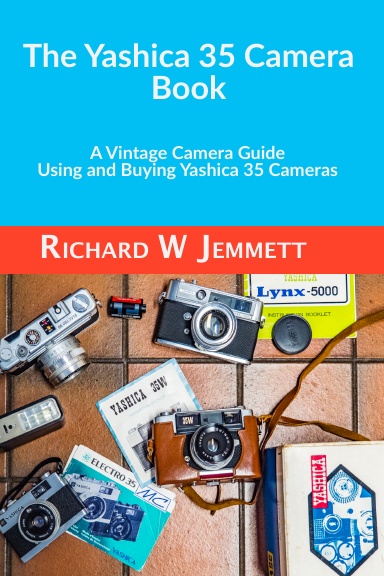




The Yashica 35 Camera Book will help you enjoy buying and photographing with film cameras from the full Yashica 35 range, including the various Electro, Lynx & Minister models.
Whether you are new to analogueOpposite of digital. Analogue data merges continuously into each other without clearly defined steps. (E.g. the colours of a rainbow are not obviously separable from one another.) More photography or you have shot vintage cameras in the past, this book will help you make a success of buying and using the YashicaYashica was a Japanese manufacturer of cameras, originally active from 1949 until 2005 when its then-owner, Kyocera, ceased production. More 35 range of cameras. Besides Richard’s experience with the cameras, you will find reprints of original guides and manuals that will help you buy, use, maintain and repair your camera. The YashicaYashica was a Japanese manufacturer of cameras, originally active from 1949 until 2005 when its then-owner, Kyocera, ceased production. More rangefinderA rangefinder is a focus mechanism that allows the user to calculate the distance of a subject through the convergence of two images. Cameras that use this mechanism are usually referred to as ‘rangefinders’. Rangefinder cameras were very popular in the 1950s, 60s and 70s. Single Lens Reflex (SLRs) and compact cameras largely replaced them in the 70s, 80s and 90s. What is not always appreciated is that rangefinders offer several tangible benefits over SLRs, not least in image quality. Indeed, many photographers would rate the Leica M Digital Rangefinder as one of the best cameras available today. More cameras are all equipped with high-quality lenses and great features from the all manual 35W to the aperture priorityIn this mode, the user can adjust the aperture and the camera automatically selects the best shutter speed to match it. In most cameras, the Aperture Priority mode is usually denoted by the letter 'A'. Most film SLRs were made as Aperture Priority - e.g. Nikon and Olympus. More Electro 35. They provide a quality alternative to SLRA single-lens reflex camera (SLR) is a camera that typically uses a mirror and prism system (hence "reflex" from the mirror's reflection) that permits the photographer to view through the lens and see exactly what will be captured. With twin lens reflex and rangefinder cameras, the viewed image could be significantly different from the final image. When the shutter button is pressed on most SLRs, the mirror flips out of the light path, allowing light to pass through to the film. Other camera typoes include DSLR, Rangefinder and Compact. [rdp-wiki-embed url="http://camera-wiki.org/wiki/SLR" toc_show='0′ edit_show='0′ infobox_show='1′] More and point & shoot cameras producing the rich colours and atmosphere that many will say only film can deliver.
These cameras capture the most enjoyable aspects of film photography, and the experience will help you become a better photographer and create some super results.
To accompany the book, the author has created a dedicated web resource page that will help you find even more information such as battery conversion sources, film suppliers, user-generated galleries and much more. We regularly update the web resource guide with information and resources to make it a valuable addition to the detailed information found in this vintage guide.
- Language : English
- Paperback : 206 pages
- ISBN-10 : 183830472X
- ISBN-13 : 978-1838304720
- Dimensions : 15.24 x 1.24 x 22.86 cm
Buy the Yashica 35 Camera Book today and start your journey to learn more about how to buy, use and enjoy these wonderful film cameras.
The book’s chapters include:
What is a RangefinderA rangefinder is a focus mechanism that allows the user to calculate the distance of a subject through the convergence of two images. Cameras that use this mechanism are usually referred to as ‘rangefinders’. Rangefinder cameras were very popular in the 1950s, 60s and 70s. Single Lens Reflex (SLRs) and compact cameras largely replaced them in the 70s, 80s and 90s. What is not always appreciated is that rangefinders offer several tangible benefits over SLRs, not least in image quality. Indeed, many photographers would rate the Leica M Digital Rangefinder as one of the best cameras available today. More?
The YashicaYashica was a Japanese manufacturer of cameras, originally active from 1949 until 2005 when its then-owner, Kyocera, ceased production. More 35 Range
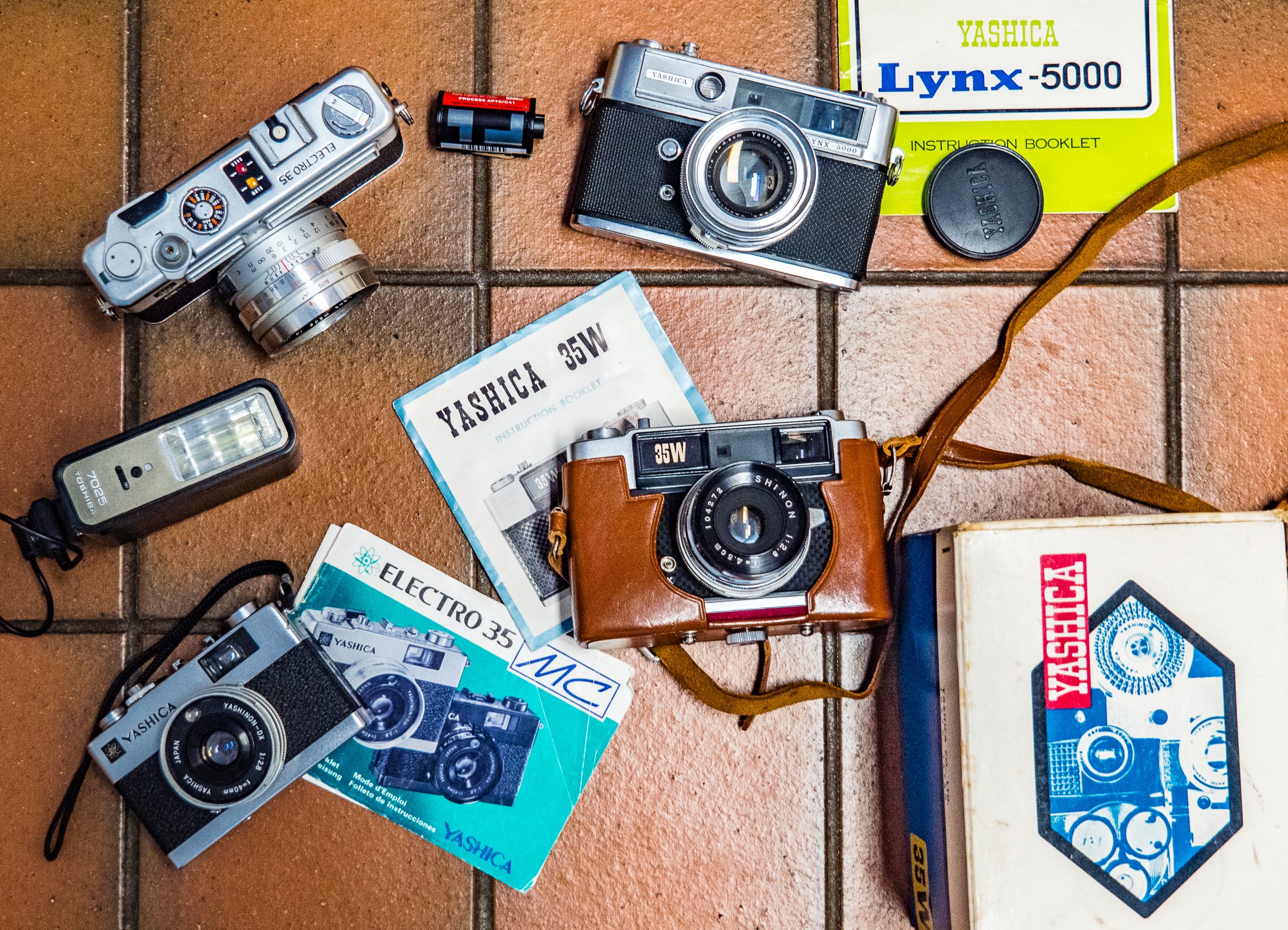
Featured Cameras – Electro 35 GSN, Lynx 5000, 35W, Electro MC
YashicaYashica was a Japanese manufacturer of cameras, originally active from 1949 until 2005 when its then-owner, Kyocera, ceased production. More 35 Camera Guides – Re-printed camera guides
Buying a YashicaYashica was a Japanese manufacturer of cameras, originally active from 1949 until 2005 when its then-owner, Kyocera, ceased production. More 35 Camera
Using a YashicaYashica was a Japanese manufacturer of cameras, originally active from 1949 until 2005 when its then-owner, Kyocera, ceased production. More 35 – Zone Focusing, Getting the Right ExposureThe amount of light that reaches the film (or camera sensor). It determines how light or dark an image is. The exposure of an image is determined by the aperture, shutter speed, and film speed (ISO). During exposure, the sensors or chemicals on the film in analogue models, are subjected to the light outside the camera for a certain time. More, Post Processing of Film
The YashicaYashica was a Japanese manufacturer of cameras, originally active from 1949 until 2005 when its then-owner, Kyocera, ceased production. More Company – History and Marketing of YashicaYashica was a Japanese manufacturer of cameras, originally active from 1949 until 2005 when its then-owner, Kyocera, ceased production. More 35 Cameras
Testing, Faults and Repair – Testing your Camera and Repair Tips
Accessories – Lens Filters, Light Meters, Cable Release, Flash, Tripods and Camera Supports, Cases and Bags, Pimping Your Camera
Making the Most of Your YashicaYashica was a Japanese manufacturer of cameras, originally active from 1949 until 2005 when its then-owner, Kyocera, ceased production. More 35 Camera – Colour or Black & White?, Architecture and Buildings, Street and Urban Photography, Landscapes, Low Light & Night Photography
Appendices – Lens & Photographic Terms, The Law and Photography (UK), What was Happening?
Excellent resource and reference.
Value and content are excellent. This is a must for collectors and repair techs.
Nice
If you have and still have a 35 GT this text is for you.. Nothing new, but everything you need to unleash
nostalgia..