
Overview
The Canon Prima Super 130 is a super compact autofocusAutofocus (AF) is an optical system that uses a sensor, a control system and a motor to focus on an automatically or manually selected point or area. The process of autofocusing generally works as follows: • An autofocus processor (AFP) makes a small change in the focusing distance.
• AFP reads the AF sensor to assess whether and by how much focus has improved.
• Using the information from (2), the AFP sets the lens to a new focusing distance.
Autofocus systems can be found on film and digital cameras. More zoom camera with an impressive 130mm zoom. It was first released in 2002. So this is a late film camera, the digital market was already expanding. In 2005 there was the last model, 130u or II, with minor improvements and multi-point autofocusAutofocus (AF) is an optical system that uses a sensor, a control system and a motor to focus on an automatically or manually selected point or area. The process of autofocusing generally works as follows: • An autofocus processor (AFP) makes a small change in the focusing distance.
• AFP reads the AF sensor to assess whether and by how much focus has improved.
• Using the information from (2), the AFP sets the lens to a new focusing distance.
Autofocus systems can be found on film and digital cameras. More. The camera is also known as Canon Sure Shot 130u and Autoboy N130.
Features and Operation
Its main features are:
38-130mm F5.6-12.5 Canon lens, 3-point autofocusAutofocus (AF) is an optical system that uses a sensor, a control system and a motor to focus on an automatically or manually selected point or area. The process of autofocusing generally works as follows: • An autofocus processor (AFP) makes a small change in the focusing distance.
• AFP reads the AF sensor to assess whether and by how much focus has improved.
• Using the information from (2), the AFP sets the lens to a new focusing distance.
Autofocus systems can be found on film and digital cameras. More with focus lock, 1-spot center focus possible, min. focus 0,6m
Electronic shutterEither mechanical and/or electronic shutters are possible. Mechanical systems can use a leaf (or iris) shutter or curtain shutter. In digital cameras a third alternative is also possible: the electronic shutter. This works by activating and then deactivating the CCD so that no further light can be recorded, regardless of whether light is hitting the CCD. The shutter controls the exposure time, which can range from thousandths of a second to several minutes or more. Fast shutter speeds freeze action, slow speeds are more suited to stationary subjects. A tripod is recommended for slow exposure shots to avoid camera shake, or IBIS. More, 2-1/560
Size 105×58.5×45.8, Weight 210 gr. without battery
25-3200 ISOInternational Organization for Standardization represents the film’s (or sensors) sensitivity to the light. The higher the number, the more information will be captured. 400 ISO film is more sensitive to light than 200 ISO film by 1 stop., automatic DX coding, self-timer, automatic film advance, several modes, 5 presets, exposure compensationAdding to or subtracting from the "correct" exposure time indicated by the camera's light meter, which results in a final exposure that is either lighter or darker than the recommended exposure time. Most cameras allow for exposure compensation in 1/2, 1/3, or full-stop increments. Note that the "correct" exposure is not necessarily the "best" exposure. More
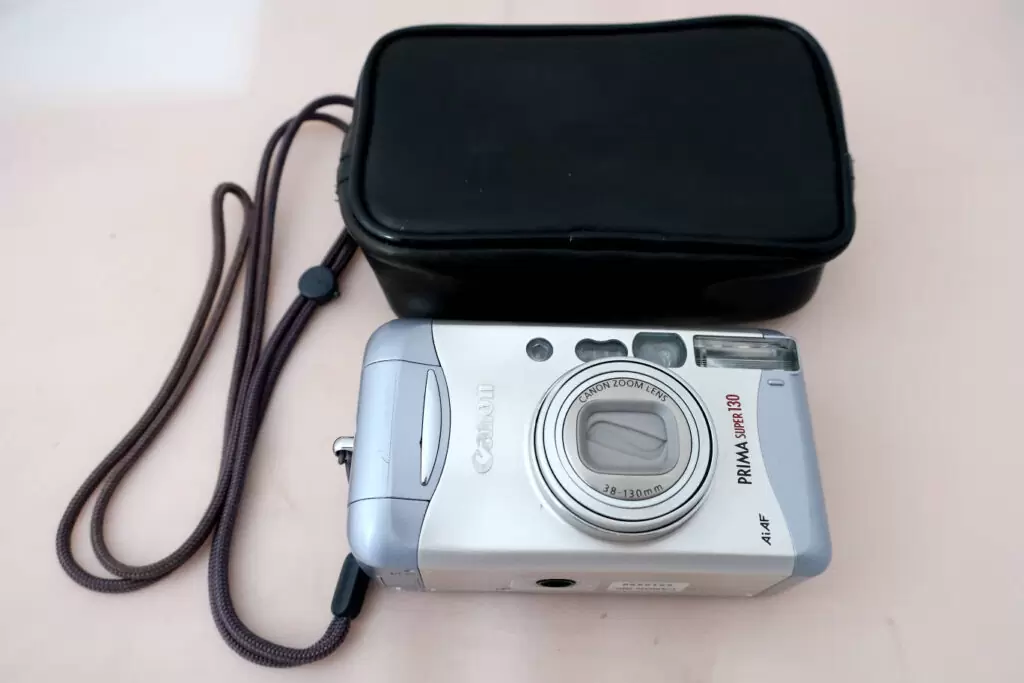


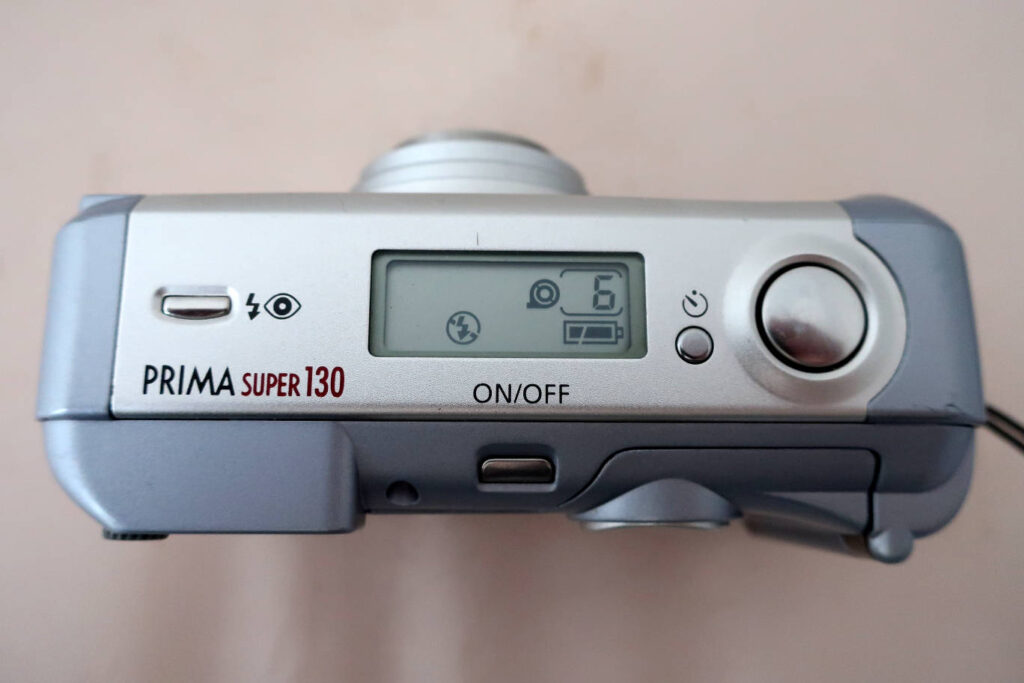

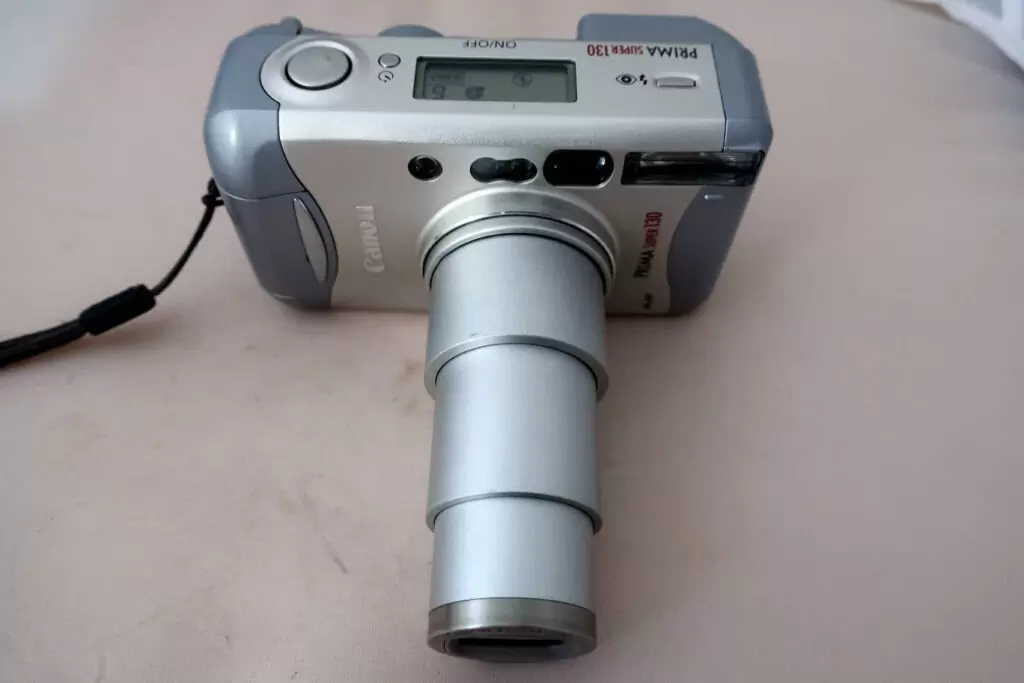
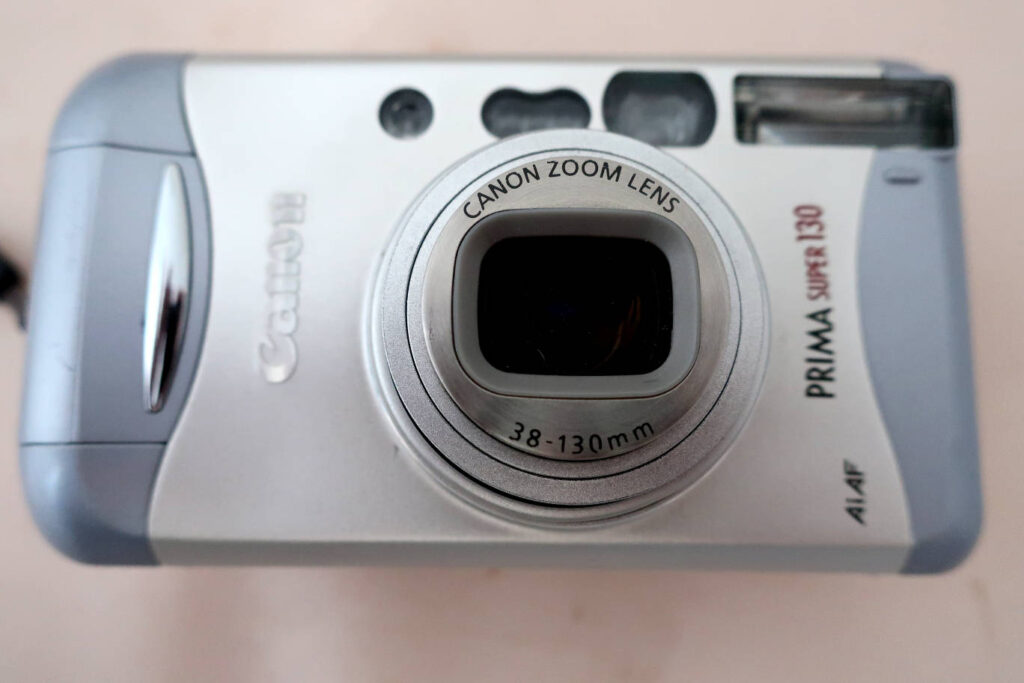

This camera is easy to use. AutofocusAutofocus (AF) is an optical system that uses a sensor, a control system and a motor to focus on an automatically or manually selected point or area. The process of autofocusing generally works as follows: • An autofocus processor (AFP) makes a small change in the focusing distance.
• AFP reads the AF sensor to assess whether and by how much focus has improved.
• Using the information from (2), the AFP sets the lens to a new focusing distance.
Autofocus systems can be found on film and digital cameras. More is responsive and works well. Putting a film is easy as well, you drop the film, tear the film leader up to the mark and that’s it. The camera winds it automatically. It has some manual settings if needed, the menu is very easy to access via the dial. Max. apertureThe aperture is basically a hole in the camera’s lens that lets light pass through it to the shutter and ultimately the film or censor. The aperture not only influences picture brightness but also regulates depth of focus. Most cameras are equipped with an iris aperture that can be freely adjusted or set according to pre-selected values. More is not impressing, but it takes nice photos nevertheless. A bigger apertureThe aperture is basically a hole in the camera’s lens that lets light pass through it to the shutter and ultimately the film or censor. The aperture not only influences picture brightness but also regulates depth of focus. Most cameras are equipped with an iris aperture that can be freely adjusted or set according to pre-selected values. More would mean much bigger lenses, much more weight and a huge body. It’s a choice. Canon recommends 400 ISOInternational Organization for Standardization represents the film’s (or sensors) sensitivity to the light. The higher the number, the more information will be captured. 400 ISO film is more sensitive to light than 200 ISO film by 1 stop. film to compensate.
This camera has some very interesting features as preset: real-time shutterEither mechanical and/or electronic shutters are possible. Mechanical systems can use a leaf (or iris) shutter or curtain shutter. In digital cameras a third alternative is also possible: the electronic shutter. This works by activating and then deactivating the CCD so that no further light can be recorded, regardless of whether light is hitting the CCD. The shutter controls the exposure time, which can range from thousandths of a second to several minutes or more. Fast shutter speeds freeze action, slow speeds are more suited to stationary subjects. A tripod is recommended for slow exposure shots to avoid camera shake, or IBIS. More release, (less focussing), flash mode memory (sets the last choice before switching the camera off as default, automatic rewind off, center-point focus, and continuous shooting. So it’s one of the few compacts not to set flash as default if you wish so.
It’s a good point-and-shoot camera with a wide-angle zoom lens, honest picture quality, a nice finish in an extremely small pocketable body. A nice find, it’s not expensive at all.
Where to Find a Canon Prima Super 130
Find a Canon Prima Super 130 on Etsy
Wiki
[rdp-wiki-embed url=”http://camera-wiki.org/wiki/Canon_Sure_Shot_130u/Prima_Super_130/Autoboy_N130″ toc_show=’0′ edit_show=’0′ infobox_show=’1′]
Check out this camera on Instagram #canonsureshot130u
Post References and Attribution
This post was created with information kindly contributed by 135Compact
Post Links
Used and new camera providers – RW Jemmett Photography Business Directory Film Processing and Supplies
Cameras and more from my Etsy Shop
[etsy-shop shop_name=”RWJemmett” section_id=”28458455″]
[etsy-shop shop_name=”RWJemmett” section_id=”28927529″]
[etsy-shop shop_name=”RWJemmett” section_id=”28814817″]