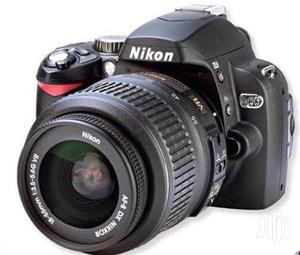
Nikon D60 Overview
The D60 is a user-friendly entry-level DSLRA digital single-lens reflex camera (digital SLR or DSLR) is a digital camera that combines the optics and the mechanisms of a single-lens reflex (SLR) camera with a digital imaging sensor. The reflex design scheme is the primary difference between a DSLR and other digital cameras. In the reflex design, light travels through the lens and then to a mirror that alternates to send the image to either the viewfinder or the image sensor. The viewfinder of a DSLR presents an image that will not differ substantially from what is captured by the camera's sensor but presents it as a direct optical view through the lens, rather than being captured by the camera's image sensor and displayed by a digital screen. DSLR is often (wrongly) used to describe cameras that are Micro Four Thirds or Bridge Camera - just because they look similar. This can bee seen when cameras are offered for sale. [rdp-wiki-embed url="http://camera-wiki.org/wiki/DSLR" toc_show='0′ edit_show='0′ infobox_show='1′] More launched in 2006 with the D40 (which replaced the first Nikon ‘starter’ model, the D50). I owned one for several years and loved the excellent construction, relatively small dimensions and weight and of course the results. The D60 is easy to pack and fits in a small bag.
The 10 megapixelA megapixel contains 1,000,000 (1 million) pixels and is the unit of measure used to describe the size of the sensor in a digital camera. It is often abbreviated to mp or MP. More D60 doesn’t have a built-in focus drive motor which means it can auto focus only with lenses that have their own drive motor (AF-S and AF-I lenses). One of the D60’s features that many photographers will like is an electronic rangefinderA rangefinder is a focus mechanism that allows the user to calculate the distance of a subject through the convergence of two images. Cameras that use this mechanism are usually referred to as ‘rangefinders’. Rangefinder cameras were very popular in the 1950s, 60s and 70s. Single Lens Reflex (SLRs) and compact cameras largely replaced them in the 70s, 80s and 90s. What is not always appreciated is that rangefinders offer several tangible benefits over SLRs, not least in image quality. Indeed, many photographers would rate the Leica M Digital Rangefinder as one of the best cameras available today. More to help manual focus on non AF-S / AF-I lenses.
There are a few things that I liked about the D60. First, as I mentioned it is quite small and light compared to the camera I replaced it with the Nikon D7000 (but larger than my Olympus Pen-F that I now use). It was easy to turn on and off and was ready to shoot in what felt like a second or two. It also had a built-in flash, you do not great results of course but it is there if you needed it.
Links
Used and new camera providers – RW Jemmett Photography Business Directory.
Comprehensive D60 Review by Camerlabs
Find a D60 on Amazon
Instagram Feed for #nikond60
Wiki – Nikon D60
[rdp-wiki-embed url=”http://camera-wiki.org/wiki/Nikon_D60″ toc_show=’0′ edit_show=’0′ infobox_show=’1′]
Get a New Nikon D60 Battery
[azp_custom_product id=”14″]