For as long as I’ve been a photographer, I’ve been fascinated by the way images anchor us to a place. A photograph isn’t just a record of light; it’s a record of where we stood, what we saw, and how the world felt in that moment. And yet, when we look at old family photos or historical images, there’s often a nagging question:
Where exactly was this taken?
It’s a simple question with surprisingly complex answers. Landscapes change. Buildings disappear. Roads shift. Trees grow. And unless the photographer left notes — and they rarely did — we’re left guessing.
That itch, that desire to stand where someone once stood, is what led me to build GhostViewer.
The Spark: Aligning Past and Present
The idea began with a box of old photographs from my family archive. Some were labelled, many weren’t. I found myself walking around Sandhurst and the surrounding villages, holding prints up at arm’s length, trying to match rooflines and tree silhouettes. It was slow, fiddly, and oddly addictive.
I realised two things:
- There’s something magical about aligning past and present. When the two images snap into place, it feels like time folds for a moment.
- The process should be easier. Not everyone wants to wrestle with PhotoshopPhotoshop is an image creation, graphic design and photo editing software developed by Adobe. The software provides many image editing features for pixel-based images, raster graphics and vector graphics. It has entered mainstream vocabulary as a verb 'to photoshop an image'. Adobe Photoshop was first released in 1988. Created by Thomas and John Knoll, it was initially developed for Macintosh computers but is now available for Windows and macOS platforms. Photoshop is part of Adobe Creative Cloud and is available on a monthly subscription. layers or perspective transforms just to see how a street has changed.
So I built a tool that does one thing beautifully: It lets you overlay an old photograph onto a modern one, right in your browser, with no uploads and no fuss.
Introducing GhostViewer
GhostViewer is a free, browser‑based web app that helps you align two images — one old, one new — and export the result as a GIF or MP4MP4 is the most prevalent video file format (MPEG-4 Part 14). MP4, Apple’s preferred format, is compatible with most devices. It stores video, audio, and text files using the MPEG-4 encoding process, but it has a lesser resolution than some others. MP4 can be used for popular social media sites such as YouTube, Facebook, Twitter, and Instagram. More. Everything happens locally on your device, so your photos never leave your computer.
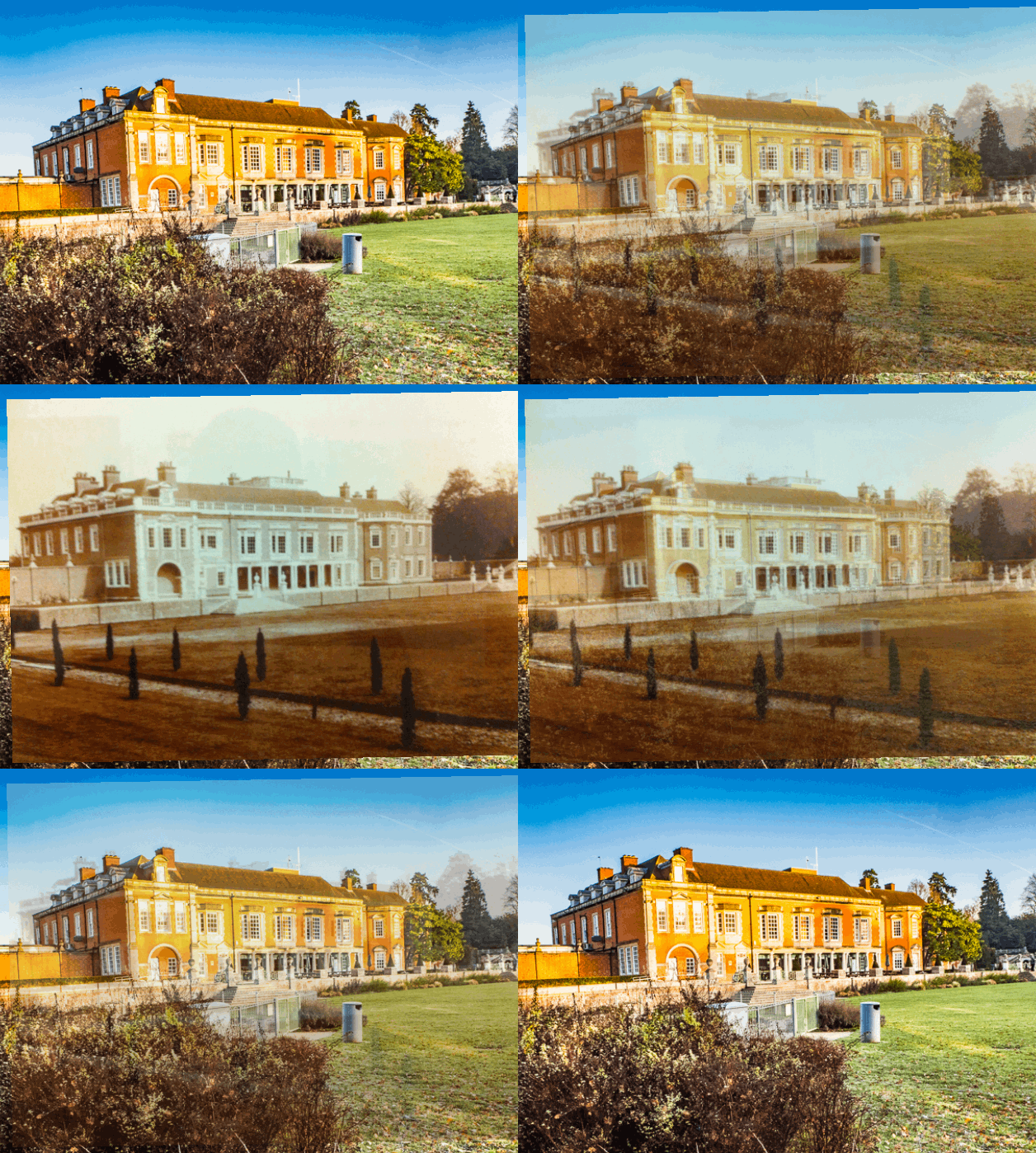
You load your images, drag them into alignment, adjust the opacity, and watch the past and present blend into a single moment.
It’s simple. It’s fast. And it’s strangely emotional.
You can try it here: https://ghostviewer.co.uk
Why This Matters to Photographers
Photography has always been about time — freezing it, stretching it, revisiting it. GhostViewer adds a new dimension to that relationship.
1. It deepens your connection to place
RephotographyRephotography — sometimes called repeat photography — is the practice of photographing the same location from the same position on two or more separate occasions, with a significant time gap between images. The objective is a direct visual comparison: a diachronic pair that shows what has changed, what has survived, and what has been lost entirely. Read the Post - The Art and Craft of Photographing Time. Rephotography Organisations and Information More forces you to slow down and look. You start noticing architectural details, horizon lines, and the subtle ways landscapes evolve.
2. It turns archival images into living stories
Old photos stop being static objects. They become interactive, layered, alive.
3. It’s a powerful tool for personal projects
Whether you’re documenting your hometown, exploring family history, or creating a long‑term landscape series, alignment adds narrative weight.
4. It’s accessible to everyone
No accounts. No uploads. No software. Just a browser and two images.
Building It: A Craftsperson’s Joy
GhostViewer is built the way I like to build things:
- Fast
- Lightweight
- Client‑side
- Focused on a single, human problem
There’s no backend, no database, no tracking. Just a clean interface and a surprisingly powerful alignment engine running entirely in the browser.
It’s the kind of project that reminds me why I love making tools — because when you strip away the complexity, you’re left with something that feels almost tactile. Something that helps people see the world differently.
What’s Next
I’m already exploring improvements:
- More example alignments
- A refined logo and visual identity
- A gallery of user‑submitted rephotographyRephotography — sometimes called repeat photography — is the practice of photographing the same location from the same position on two or more separate occasions, with a significant time gap between images. The objective is a direct visual comparison: a diachronic pair that shows what has changed, what has survived, and what has been lost entirely. Read the Post - The Art and Craft of Photographing Time. Rephotography Organisations and Information More
- A guide to shooting modern reference images for best results
But for now, GhostViewer is out in the world, and that feels like a milestone worth sharing.
If you try it…
I’d genuinely love to see what you create. Whether it’s a family photo, a village street, or a landscape you’ve known for decades, there’s something special about watching the past fade into the present.
You can explore GhostViewer here: https://ghostviewer.co.uk
And if you’re working on your own rephotographyRephotography — sometimes called repeat photography — is the practice of photographing the same location from the same position on two or more separate occasions, with a significant time gap between images. The objective is a direct visual comparison: a diachronic pair that shows what has changed, what has survived, and what has been lost entirely. Read the Post - The Art and Craft of Photographing Time. Rephotography Organisations and Information More project, I’d be delighted to hear about it.