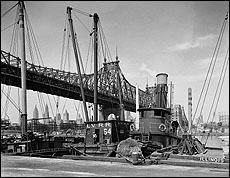
How photographers — from Victorian surveyors to smartphone users — have used the camera to measure change, document history, and make art from the gap between then and now.
There are plenty of reasons to pick up a camera. To capture beauty. To document a moment. To tell a story. To make art. But one of the most intellectually demanding — and ultimately most rewarding — reasons is also one of the oldest: to return to a place that has already been photographed, stand in the same spot, and record what has changed.
This is rephotographyRephotography — sometimes called repeat photography — is the practice of photographing the same location from the same position on two or more separate occasions, with a significant time gap between images. The objective is a direct visual comparison: a diachronic pair that shows what has changed, what has survived, and what has been lost entirely. Read the Post - The Art and Craft of Photographing Time. Rephotography Organisations and Information More. And whether you’re shooting on film or digital, with a large format view camera or a mirrorlessTechnically speaking most DSLR, point-and-shoot and smartphone cameras are mirrorless, in that they don’t have internal mirrors. However, mirrorless camera is a specific term for a camera where the sensor is directly exposed to light and the photographer has a preview of the potential image at all times to view on an electronic viewfinder. For example the Olympus and Panasonic micro four-thirds cameras are mirrorless. More body, the discipline it demands will sharpen every aspect of how you see and work.
What Rephotography Actually Is
RephotographyRephotography — sometimes called repeat photography — is the practice of photographing the same location from the same position on two or more separate occasions, with a significant time gap between images. The objective is a direct visual comparison: a diachronic pair that shows what has changed, what has survived, and what has been lost entirely. Read the Post - The Art and Craft of Photographing Time. Rephotography Organisations and Information More — sometimes called repeat photography — is the practice of photographing the same location from the same position on two or more separate occasions, with a significant time gap between images. The objective is a direct visual comparison: a diachronicConcerned with the way something changes or develops over time, as opposed to examining it at a single fixed point. In rephotography, a diachronic image pair shows the same location across two or more points in time, making change — or continuity — directly visible. The term contrasts with synchronic, which describes a snapshot of something as it exists at one particular moment. More pair that shows what has changed, what has survived, and what has been lost entirely.
The word “diachronic” is worth pausing on. It comes from the Greek: dia (through) + chronos (time). A diachronicConcerned with the way something changes or develops over time, as opposed to examining it at a single fixed point. In rephotography, a diachronic image pair shows the same location across two or more points in time, making change — or continuity — directly visible. The term contrasts with synchronic, which describes a snapshot of something as it exists at one particular moment. More view is one that cuts through time rather than capturing a single moment within it. That’s precisely what a well-executed rephotograph does — it makes time itself the subject.
At one end of the spectrum, rephotographyRephotography — sometimes called repeat photography — is the practice of photographing the same location from the same position on two or more separate occasions, with a significant time gap between images. The objective is a direct visual comparison: a diachronic pair that shows what has changed, what has survived, and what has been lost entirely. Read the Post - The Art and Craft of Photographing Time. Rephotography Organisations and Information More can be casual and impressionistic: finding an old postcard of a town square, returning roughly to the same viewpoint, and taking a shot that invites comparison without claiming precision. At the other end, it is an exacting technical discipline — matching lens coverage, depth of field, season, time of day, and camera height to achieve an overlay so precise that the edges of buildings align exactly between the two frames.
Both approaches have value. But understanding the full technical and historical depth of the practice will make you a better rephotographer at any level.
A History Written in Light
The Scientific Origins
The history of rephotographyRephotography — sometimes called repeat photography — is the practice of photographing the same location from the same position on two or more separate occasions, with a significant time gap between images. The objective is a direct visual comparison: a diachronic pair that shows what has changed, what has survived, and what has been lost entirely. Read the Post - The Art and Craft of Photographing Time. Rephotography Organisations and Information More is inseparable from the history of photogrammetryThe science of making precise measurements and spatial data from photographs. By analysing the geometry of objects as they appear in an image — their relative size, position, and perspective — photogrammetrists can calculate real-world distances, elevations, and coordinates without physically measuring them on the ground. In the context of rephotography, photogrammetric principles underpin the practice of precisely reoccupying an original camera position: working backwards from the geometry of a historical photograph to determine exactly where, at what height, and with what focal length the original image was made. More — the science of making measurements from photographs. From the 1850s onwards, surveyors and scientists recognised that a photograph, properly taken and documented, could serve as a permanent benchmark. Return to the same spot with the same equipment, and you could measure change with genuine precision.
By the 1880s and 1890s, systematic rephotographyRephotography — sometimes called repeat photography — is the practice of photographing the same location from the same position on two or more separate occasions, with a significant time gap between images. The objective is a direct visual comparison: a diachronic pair that shows what has changed, what has survived, and what has been lost entirely. Read the Post - The Art and Craft of Photographing Time. Rephotography Organisations and Information More programmes were underway across Europe and North America. In Canada, E. Deville was using repeat photography to map the Rocky Mountains from 1889. Sebastian Finsterwalder was doing aerial photogrammetryThe science of making precise measurements and spatial data from photographs. By analysing the geometry of objects as they appear in an image — their relative size, position, and perspective — photogrammetrists can calculate real-world distances, elevations, and coordinates without physically measuring them on the ground. In the context of rephotography, photogrammetric principles underpin the practice of precisely reoccupying an original camera position: working backwards from the geometry of a historical photograph to determine exactly where, at what height, and with what focal length the original image was made. More from balloons in the Alps from 1890. The US Geological Survey developed rigorous protocols for reoccupying camera stations — documented precisely enough that future photographers could return to the exact position decades later.
This scientific tradition never went away. Today, climate researchers rely on rephotographyRephotography — sometimes called repeat photography — is the practice of photographing the same location from the same position on two or more separate occasions, with a significant time gap between images. The objective is a direct visual comparison: a diachronic pair that shows what has changed, what has survived, and what has been lost entirely. Read the Post - The Art and Craft of Photographing Time. Rephotography Organisations and Information More to document glacier retreat, comparing images taken a century apart to show what no graph can quite communicate. Ecologists track vegetation recovery after wildfire. Coastal geographers monitor erosion and deposition. The camera remains, as it has always been, one of the most honest instruments we have for recording the physical world.
The Documentary Tradition
Alongside the scientific use of repeat photography, a parallel documentary tradition developed — one more concerned with human landscapes than natural ones.
The great urban survey photographers of the late 19th and early 20th centuries — working in cities from London to New York to Montreal — were creating archives that later generations would inevitably want to revisit. William Notman’s photographs of 19th-century Montreal, for example, were rephotographed by Andrzej Maciejewski in 2002 for the McCord Museum’s landmark virtual exhibition Urban Life through Two Lenses. The project demonstrated something that has since become a template for heritage rephotographyRephotography — sometimes called repeat photography — is the practice of photographing the same location from the same position on two or more separate occasions, with a significant time gap between images. The objective is a direct visual comparison: a diachronic pair that shows what has changed, what has survived, and what has been lost entirely. Read the Post - The Art and Craft of Photographing Time. Rephotography Organisations and Information More: pair rigorous technique with cultural depth, and the result transcends both photography and history.
Perhaps the most celebrated American example is New York Changing, in which photographer Douglas LevereDouglas Levere began rephotographing Berenice Abbott's Changing New York in 1997, returning to her original locations with a large format camera at the same time of day and season. The project had an almost accidental origin: Levere was at an auction preview when he stopped in front of Abbott's vintage contact print of Broadway near Broome Street, photographed in 1935. He lived on Broome Street. Standing in front of an image of the view outside his own building, taken six decades earlier, he found himself compulsively comparing and contrasting — and before long, imagining what his own camera would see from the same spot. What followed was a painstaking effort to recreate not just the locations but the conditions of the original photographs. Levere sourced a camera of the same type Abbott had used, and worked to match the time of year and time of day as precisely as possible. Her photographs were dated, which solved the seasonal question, but finding the exact position, angle, and light proved considerably harder. On one occasion, needing to photograph Fifth Avenue shoppers from a double-decker bus, and unable to get permission from the city to stop in traffic, Levere had the bus driver feign an emergency — placing orange cones on the road and opening the engine hood — in order to hold position long enough to make the exposure at precisely 1:10 PM. Bridge 1 - PHOTO: COURTESY OF THE COLLECTION OF THE MUSEUM OF NEW YORK. PHOTO: DOUGLAS LEVERE Gif created using GhostViewer The resulting book, New York Changing, was published by Princeton Architectural Press in 2004 and drew wide critical attention. Columbia University photographer and educator Thomas Roma wrote that the project would seem bound to collapse under the weight of Abbott's formidable legacy — and that the photographs prove otherwise in every way. The project remains one of the most technically rigorous and culturally resonant examples of rephotography ever produced — a reminder that the discipline, done properly, is as much an act of historical research as it is of photography. [azp_custom_product id="27"] More spent years rephotographing over 114 of Berenice Abbott’s iconic Changing New York images from the 1930s. Abbott herself had been documenting a city in transformation. Levere photographed her photographs being photographed again — a project that became a meditation on photography, time, and the city simultaneously.
Film, Large Format, and the Technical Challenge
For much of the 20th century, serious rephotographyRephotography — sometimes called repeat photography — is the practice of photographing the same location from the same position on two or more separate occasions, with a significant time gap between images. The objective is a direct visual comparison: a diachronic pair that shows what has changed, what has survived, and what has been lost entirely. Read the Post - The Art and Craft of Photographing Time. Rephotography Organisations and Information More was a large format discipline. The reasons are practical: large format cameras produce negatives with enough resolutionRefers to the number of pixels, both horizontally and vertically, used to either capture or display an image. The higher the resolution, the finer the image detail will be. More to reward close comparison, and their technical controls — rise, fall, shift, tilt, swing — give the photographer precise command over perspective and plane of focus that smaller format cameras cannot match.
Working from an original large format image, a rephotographer would need to identify the original camera’s position and height, the approximate focal lengthThe optical distance in millimetres between a camera lens and the film (or sensor on a digital camera). It determines the height and width of the scene being captured, known as the field of view. More of the lens, and the film format used — then replicate those parameters as closely as possible. The process could require multiple reconnaissance visits before a single frame was exposed.
Film photographers working in this tradition developed an almost forensic relationship with original images. Reading shadows to determine time of day. Reading vegetation to determine season. Studying reflections in windows. Measuring the apparent height of kerb stones against doorsteps to triangulate camera height.
It is painstaking work — and it is genuinely photographic work, in the sense that it demands the full exercise of your technical understanding.
The Technical Craft: What Precise Rephotography Requires
Whether you’re working digitally or on film, precise rephotographyRephotography — sometimes called repeat photography — is the practice of photographing the same location from the same position on two or more separate occasions, with a significant time gap between images. The objective is a direct visual comparison: a diachronic pair that shows what has changed, what has survived, and what has been lost entirely. Read the Post - The Art and Craft of Photographing Time. Rephotography Organisations and Information More involves solving the same set of problems.
Finding and Reaching the Original Viewpoint
This is often the most difficult step, and the one that filters out casual attempts from serious ones. The original vantage point may no longer exist. A building that provided a high viewpoint may have been demolished. A hillside may have been built over. A window from which a photographer once looked down into a street may now be inside a private office.
Before committing to a rephotographyRephotography — sometimes called repeat photography — is the practice of photographing the same location from the same position on two or more separate occasions, with a significant time gap between images. The objective is a direct visual comparison: a diachronic pair that shows what has changed, what has survived, and what has been lost entirely. Read the Post - The Art and Craft of Photographing Time. Rephotography Organisations and Information More project, research whether the original viewpoint is accessible. Sometimes the answer is no — and the honest response is to find a different original image, not to approximate from a different position and call it rephotographyRephotography — sometimes called repeat photography — is the practice of photographing the same location from the same position on two or more separate occasions, with a significant time gap between images. The objective is a direct visual comparison: a diachronic pair that shows what has changed, what has survived, and what has been lost entirely. Read the Post - The Art and Craft of Photographing Time. Rephotography Organisations and Information More.
When the viewpoint is accessible but elevated above ground level, you may need a ladder, a cherry picker, or negotiated access to a building. Many serious rephotographers keep a small telescoping pole or a camera mast in their kit for exactly this purpose.
Matching Focal Length and Field of View
Modern lenses cover different sensor formats from the cameras used to make historical images. A 50mm lens on a 35mm film camera has a different field of view from a 50mm lens on an APS-C or micro four thirds digital sensor.
You need to calculate the original lens’s angle of view and match it with your current equipment. For historical photographs taken before focal lengthThe optical distance in millimetres between a camera lens and the film (or sensor on a digital camera). It determines the height and width of the scene being captured, known as the field of view. More metadata existed, this often means estimating from the geometry of the image itself — measuring the apparent size of known objects at known distances to work backwards to the original focal lengthThe optical distance in millimetres between a camera lens and the film (or sensor on a digital camera). It determines the height and width of the scene being captured, known as the field of view. More.
Reading the Light: Season and Time of Day
Shadows are a clock. Vegetation is a calendar. A skilled rephotographer reads both.
The angle and direction of shadows in an original photograph tells you the approximate time of day and the season. In the northern hemisphere, a shadow falling due north means the sun is roughly due south — i.e., midday, and approximately equinoctial. Longer shadows angled towards the northwest indicate a summer afternoon. Short, steeply angled shadows indicate winter or midday.
Leafed-out deciduous trees indicate late spring through early autumn. Bare branches indicate winter or early spring. Blossom on fruit trees narrows the window to a few weeks in April or May in the UK.
The goal is often to return at the same time of year and the same time of day, so that the quality and direction of light is consistent across both images. This matters both aesthetically and practically — matching the shadows makes precise overlay possible.
Camera Height
This is frequently overlooked by inexperienced rephotographers, and it shows. Even a 15cm difference in camera height changes perspective noticeably when comparing images of buildings. Study the original carefully: how high were the subjects’ eyes relative to the horizon? Where do the tops of kerb stones or steps fall relative to doorways? These are your clues.
Carry a measuring tape and mark your camera height against a fixed reference point whenever you’re working on a long-term rephotographyRephotography — sometimes called repeat photography — is the practice of photographing the same location from the same position on two or more separate occasions, with a significant time gap between images. The objective is a direct visual comparison: a diachronic pair that shows what has changed, what has survived, and what has been lost entirely. Read the Post - The Art and Craft of Photographing Time. Rephotography Organisations and Information More project. If you return to a location across multiple years, consistency of camera height matters.
Taking Safe Rephotographs
Please consider your own health and safety before taking any pictures.
Bear in mind that the locations may have changed since the originals were taken. Ground or workings may have become treacherous, roads may have become busier, an area could have become more isolated.
Always let someone know where you are going and don’t put yourself in danger for the sake of a photograph.
From Film to Digital: How the Tools Have Changed
The shift from film to digital changed rephotographyRephotography — sometimes called repeat photography — is the practice of photographing the same location from the same position on two or more separate occasions, with a significant time gap between images. The objective is a direct visual comparison: a diachronic pair that shows what has changed, what has survived, and what has been lost entirely. Read the Post - The Art and Craft of Photographing Time. Rephotography Organisations and Information More in ways that go beyond the obvious.
Immediate feedback is perhaps the most significant. Shooting on film, you had no way to check your alignment at the viewpoint. You worked carefully, bracketed your exposures, and hoped. Shooting digitally, you can call up the original image on your camera’s screen and use live view or a semi-transparent overlay to check alignment before you shoot. This has made precision rephotographyRephotography — sometimes called repeat photography — is the practice of photographing the same location from the same position on two or more separate occasions, with a significant time gap between images. The objective is a direct visual comparison: a diachronic pair that shows what has changed, what has survived, and what has been lost entirely. Read the Post - The Art and Craft of Photographing Time. Rephotography Organisations and Information More accessible to a much wider range of photographers.
Computational alignment has taken this further. Feature-matching algorithms can analyse what your camera sees and compare it against the reference image in real time, guiding you millimetre by millimetre into the correct position. What once required a surveyor’s instinct can now be assisted by software. Take a look at the GhostViewer web app and the GhostViewer camera feature that works Android and iOS phones though teh web browser.
Post-processing and overlay is where digital really comes into its own. In Lightroom or PhotoshopPhotoshop is an image creation, graphic design and photo editing software developed by Adobe. The software provides many image editing features for pixel-based images, raster graphics and vector graphics. It has entered mainstream vocabulary as a verb 'to photoshop an image'. Adobe Photoshop was first released in 1988. Created by Thomas and John Knoll, it was initially developed for Macintosh computers but is now available for Windows and macOS platforms. Photoshop is part of Adobe Creative Cloud and is available on a monthly subscription., you can align two images pixelPixel is the smallest unit of programmable colour represented on a digital display. Every photograph, in digital form, is made up of pixels. Higher resolutions mean that there are more pixels per inch (PPI), resulting in more pixel information and creating a high-quality, crisp image. Images with lower resolutions have fewer pixels, and if those few pixels are too large (usually when an image is stretched), they can become visible. The word “pixel” means a picture element. However, the number of pixels is not the determining factor in how good a camera is. More by pixelPixel is the smallest unit of programmable colour represented on a digital display. Every photograph, in digital form, is made up of pixels. Higher resolutions mean that there are more pixels per inch (PPI), resulting in more pixel information and creating a high-quality, crisp image. Images with lower resolutions have fewer pixels, and if those few pixels are too large (usually when an image is stretched), they can become visible. The word “pixel” means a picture element. However, the number of pixels is not the determining factor in how good a camera is. More, adjust opacity, and create transition effects — the classic “wipe” from then to now — that simply weren’t possible in the darkroom. Dedicated rephotographyRephotography — sometimes called repeat photography — is the practice of photographing the same location from the same position on two or more separate occasions, with a significant time gap between images. The objective is a direct visual comparison: a diachronic pair that shows what has changed, what has survived, and what has been lost entirely. Read the Post - The Art and Craft of Photographing Time. Rephotography Organisations and Information More software takes this further still. Or once again you can align using the GhostViewer web app.
ResolutionRefers to the number of pixels, both horizontally and vertically, used to either capture or display an image. The higher the resolution, the finer the image detail will be. More and archival quality remain areas where large format film retains genuine advantages. A 5×4 negative scanned at high resolutionRefers to the number of pixels, both horizontally and vertically, used to either capture or display an image. The higher the resolution, the finer the image detail will be. More contains spatial information that no current digital sensor can match. For projects where the finest architectural detail matters across a 100-year gap, large format film is still the right tool.
Rephotography as Art
Not all rephotographyRephotography — sometimes called repeat photography — is the practice of photographing the same location from the same position on two or more separate occasions, with a significant time gap between images. The objective is a direct visual comparison: a diachronic pair that shows what has changed, what has survived, and what has been lost entirely. Read the Post - The Art and Craft of Photographing Time. Rephotography Organisations and Information More is documentary. Some of the most compelling work in the field is explicitly artistic — using the structural device of temporal comparison to explore memory, loss, identity, and the nature of photography itself.
Mark Klett and Byron Wolfe’s Reconstructing the View project in Yosemite Valley layered multiple historical photographs of the same scenes onto single large prints, creating palimpsests in which different eras of image-making coexist and comment on each other. The project raises questions about how landscape photography shapes our perception of place — and whether any photograph of Yosemite can escape the weight of all the photographs that came before it.
In a different register, Irina Werning’s Back to the Future series asked subjects to recreate their own childhood photographs — same pose, same clothing replicated or sourced, same location — decades later. The result is both funny and quietly devastating: the body remembers poses the mind has long forgotten.
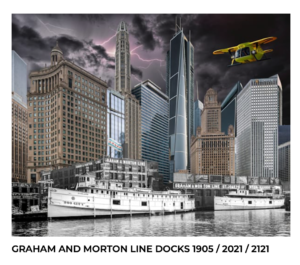
These projects demonstrate something important: rephotography’s structural rigour doesn’t constrain artistic ambition. If anything, the discipline of matching creates a framework within which the differences become more eloquent. You only notice what has changed because everything else is held constant.
Digital Tools and Online Resources
The contemporary rephotographer has access to a range of tools and communities that didn’t exist even a decade ago.
GhostViewer
GhostViewer is a purpose-built platform for then-and-now photography, with particular focus on the British historic landscape. It provides an overlay tool that lets you align historical images against your current view in real time, a growing archive of georeferenced historical photographs, and a contributor community building out coverage across the UK. For photographers interested in historic rephotographyRephotography — sometimes called repeat photography — is the practice of photographing the same location from the same position on two or more separate occasions, with a significant time gap between images. The objective is a direct visual comparison: a diachronic pair that shows what has changed, what has survived, and what has been lost entirely. Read the Post - The Art and Craft of Photographing Time. Rephotography Organisations and Information More of British locations, it’s currently the most focused resource available.
re.photos
re.photos is an international web portal for creating, browsing, searching, and sharing rephotographs. It allows georeferenced upload of image pairs and has a growing community of contributors across multiple countries. A good resource for discovering rephotographyRephotography — sometimes called repeat photography — is the practice of photographing the same location from the same position on two or more separate occasions, with a significant time gap between images. The objective is a direct visual comparison: a diachronic pair that shows what has changed, what has survived, and what has been lost entirely. Read the Post - The Art and Craft of Photographing Time. Rephotography Organisations and Information More projects beyond the anglophone world.
Geograph Britain and Ireland
Geograph is a crowdsourced geographic photography project covering every OS grid square in Britain and Ireland. With images dating back to the early 2000s and a systematic approach to coverage, it’s becoming a genuinely valuable historical archive in its own right — an unintentional rephotographyRephotography — sometimes called repeat photography — is the practice of photographing the same location from the same position on two or more separate occasions, with a significant time gap between images. The objective is a direct visual comparison: a diachronic pair that shows what has changed, what has survived, and what has been lost entirely. Read the Post - The Art and Craft of Photographing Time. Rephotography Organisations and Information More resource that will only grow in importance as the years pass.
Old Maps Online / National Library of Scotland Maps
For establishing historical context and locating the original positions of demolished structures, the National Library of Scotland’s map collection is an extraordinary resource. Georeferenced historical OS maps overlaid on current satellite imagery let you locate a building shown in a Victorian photograph, even when the building itself is long gone.
Francis Frith Collection
The Francis Frith Collection holds one of the largest archives of British topographical photography, spanning the 1860s to the 1970s. Many images are georeferenced and searchable by place name. For village and small-town rephotographyRephotography — sometimes called repeat photography — is the practice of photographing the same location from the same position on two or more separate occasions, with a significant time gap between images. The objective is a direct visual comparison: a diachronic pair that shows what has changed, what has survived, and what has been lost entirely. Read the Post - The Art and Craft of Photographing Time. Rephotography Organisations and Information More in England and Wales, this is often the best starting point for finding original images.
Flickr Commons
Flickr Commons aggregates public domain and openly licensed historical photographs from major institutions worldwide — the Library of Congress, the British Library, the Smithsonian, and many others. An invaluable source for finding high-resolution originals with clear rights status.
Starting Your Own Rephotography Practice
If you haven’t tried rephotographyRephotography — sometimes called repeat photography — is the practice of photographing the same location from the same position on two or more separate occasions, with a significant time gap between images. The objective is a direct visual comparison: a diachronic pair that shows what has changed, what has survived, and what has been lost entirely. Read the Post - The Art and Craft of Photographing Time. Rephotography Organisations and Information More before, the best way to start is simply: pick one image and follow it as far as it takes you.
Find a historical photograph of a place you know well — a town centre, a village, a stretch of coast. It doesn’t need to be famous or professionally shot. A postcard from 1910 is a perfectly good starting point. Spend some time studying it. Where was the camera? What time of day? What season?
Then go there. Take your time. Match the position as closely as you can. Come back a second time if you need to. When you’ve made the shot, put the two images side by side.
What you’ll find is that rephotographyRephotography — sometimes called repeat photography — is the practice of photographing the same location from the same position on two or more separate occasions, with a significant time gap between images. The objective is a direct visual comparison: a diachronic pair that shows what has changed, what has survived, and what has been lost entirely. Read the Post - The Art and Craft of Photographing Time. Rephotography Organisations and Information More changes how you look at every photograph you subsequently make. You start to think about what your images will tell someone who returns to the same spot in fifty years. You start to read the landscape as a record rather than a scene. And you start to understand, in a practical and visceral way, what photographers before you were actually doing when they set up their cameras.
That shift in perspective — from image-maker to participant in an ongoing visual record — is what rephotographyRephotography — sometimes called repeat photography — is the practice of photographing the same location from the same position on two or more separate occasions, with a significant time gap between images. The objective is a direct visual comparison: a diachronic pair that shows what has changed, what has survived, and what has been lost entirely. Read the Post - The Art and Craft of Photographing Time. Rephotography Organisations and Information More ultimately offers. It’s one of the most interesting things a camera can do. You may like to see what the resources on this RW Jemmett photography website and also the GhostViewer partners.
Here is a resource list. As I encounter more tools and projects worth knowing about. If you’re working on a rephotographyRephotography — sometimes called repeat photography — is the practice of photographing the same location from the same position on two or more separate occasions, with a significant time gap between images. The objective is a direct visual comparison: a diachronic pair that shows what has changed, what has survived, and what has been lost entirely. Read the Post - The Art and Craft of Photographing Time. Rephotography Organisations and Information More project and would like to share it here, get in touch. If you are looking for an alignment tool please head over to GhostViewer a rephotographyRephotography — sometimes called repeat photography — is the practice of photographing the same location from the same position on two or more separate occasions, with a significant time gap between images. The objective is a direct visual comparison: a diachronic pair that shows what has changed, what has survived, and what has been lost entirely. Read the Post - The Art and Craft of Photographing Time. Rephotography Organisations and Information More alignment tool developed by RW Jemmett
[azp_custom_product id=”28″]