The FujifilmFujifilm Corporation is a Japanese company, which originally appeared as a film manufacturer and later expanded into camera production. Before 2006, the corporate name was Fuji Photo Film Co., Ltd. and many photographers continue to use the name "Fuji" informally. More Zoom Date 145 is a simple to use compact camera. The camera was made by Fuji in Japan from around 2000 and fitted with a 38-145mm zoom lens and databack. It has automatic focus, metering, film transport and flash systems built-in. Fitted with self-timer and tripodStand to which the camera can be attached hold it steady, especially during slow exposure shots where camera shake must be avoided. Most tripods have three legs while professionals prefer the more compact but less stable one-legged (mono) versions. More mount. It requires an easy to find CR123A battery.
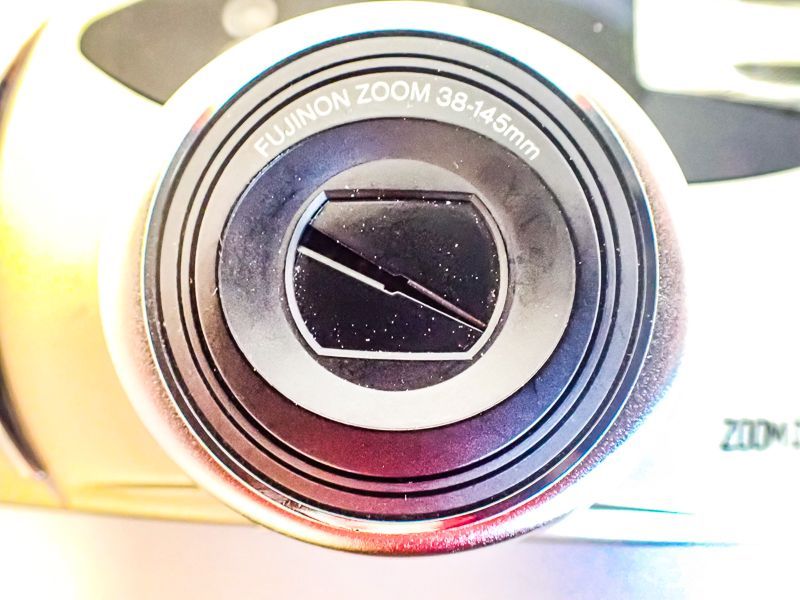
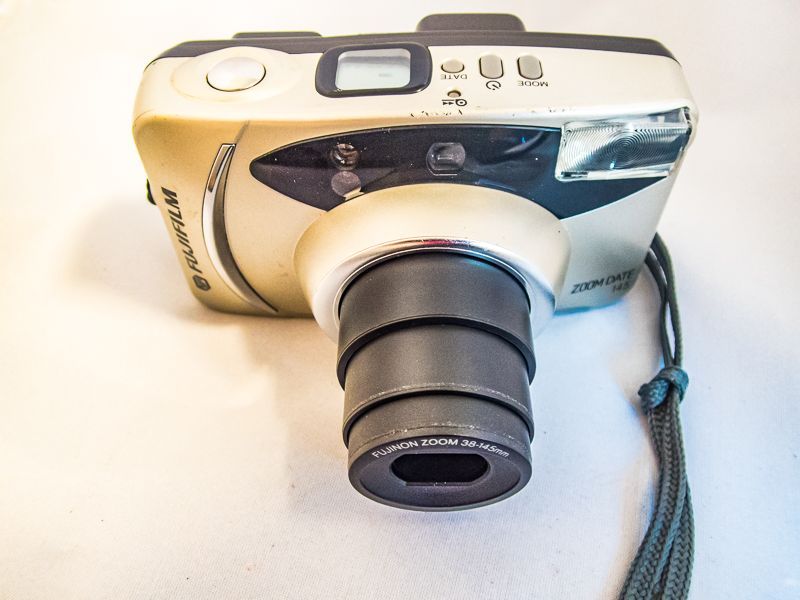

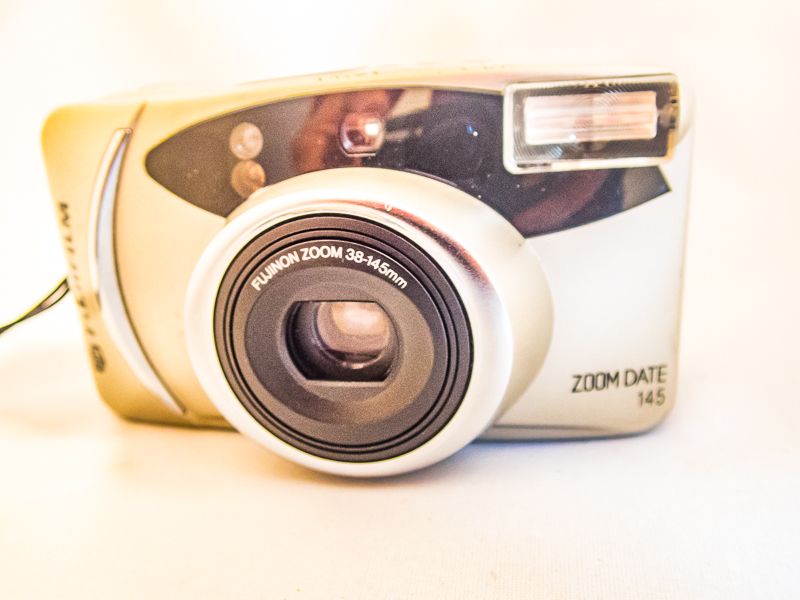

The camera is able to focus from 0.9m to infinity. And the zoom is changed with the small the rocker switch on the back. The shutterEither mechanical and/or electronic shutters are possible. Mechanical systems can use a leaf (or iris) shutter or curtain shutter. In digital cameras a third alternative is also possible: the electronic shutter. This works by activating and then deactivating the CCD so that no further light can be recorded, regardless of whether light is hitting the CCD. The shutter controls the exposure time, which can range from thousandths of a second to several minutes or more. Fast shutter speeds freeze action, slow speeds are more suited to stationary subjects. A tripod is recommended for slow exposure shots to avoid camera shake, or IBIS. More release can be half-pressed to create an autofocusAutofocus (AF) is an optical system that uses a sensor, a control system and a motor to focus on an automatically or manually selected point or area. The process of autofocusing generally works as follows: • An autofocus processor (AFP) makes a small change in the focusing distance.
• AFP reads the AF sensor to assess whether and by how much focus has improved.
• Using the information from (2), the AFP sets the lens to a new focusing distance.
Autofocus systems can be found on film and digital cameras. More lock. Beside the viewfinder is a LED indicator that lights in green when the focus is obtained. The shutterEither mechanical and/or electronic shutters are possible. Mechanical systems can use a leaf (or iris) shutter or curtain shutter. In digital cameras a third alternative is also possible: the electronic shutter. This works by activating and then deactivating the CCD so that no further light can be recorded, regardless of whether light is hitting the CCD. The shutter controls the exposure time, which can range from thousandths of a second to several minutes or more. Fast shutter speeds freeze action, slow speeds are more suited to stationary subjects. A tripod is recommended for slow exposure shots to avoid camera shake, or IBIS. More has speeds of 1/2 to 1/250 sec.
The built-in flash has a 5 second recycle time. Flash modes include automatic, red-eye reduction, fill-flash, flash off, and a night portrait slow sync mode. The self-timer has a delay of 10 seconds and can be set to fire up to 3 exposures. The finder is a zooming type and there are indicators for the frame, parallaxApparent alteration in the relative position of two objects that occurs when there is a change in the observer's viewpoint. Also, a term applied to the difference between the two viewpoints. Because of the parallax, the picture seen in the viewfinder of a camera is not the same as the picture seen by the lens that is a small distance below or to the side. The effect is not serious beyond about 2 metres, but closer than this the photographer needs to make an allowance. Some viewfinders have correction marks. More and AF, frame, parallaxApparent alteration in the relative position of two objects that occurs when there is a change in the observer's viewpoint. Also, a term applied to the difference between the two viewpoints. Because of the parallax, the picture seen in the viewfinder of a camera is not the same as the picture seen by the lens that is a small distance below or to the side. The effect is not serious beyond about 2 metres, but closer than this the photographer needs to make an allowance. Some viewfinders have correction marks. More correction mark (for subjects closer than 1.5m), AF lamp. The LCD displays exposureThe amount of light that reaches the film (or camera sensor). It determines how light or dark an image is. The exposure of an image is determined by the aperture, shutter speed, and film speed (ISO). During exposure, the sensors or chemicals on the film in analogue models, are subjected to the light outside the camera for a certain time. More counter (it counts down), timer mode, date, battery, and flash status.
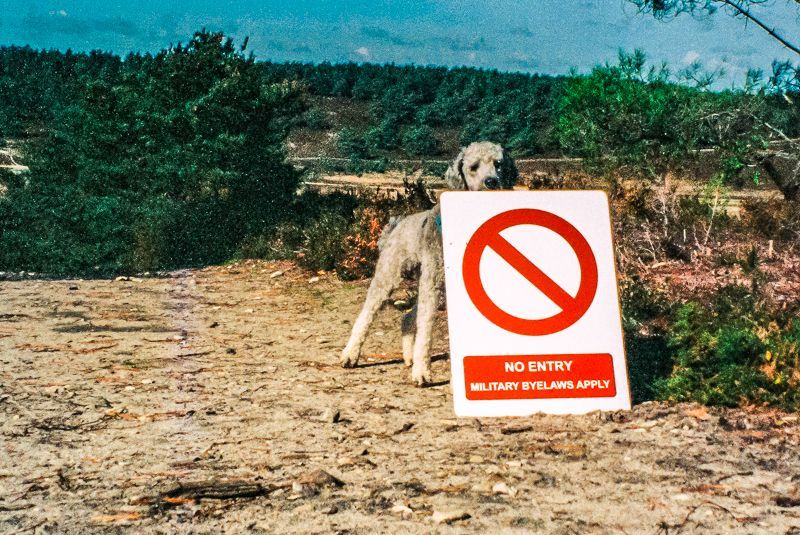
It is compatible with DX coded film with speeds of 50 to 3200 ISOInternational Organization for Standardization represents the film’s (or sensors) sensitivity to the light. The higher the number, the more information will be captured. 400 ISO film is more sensitive to light than 200 ISO film by 1 stop.. A non-coded film is set a ISOInternational Organization for Standardization represents the film’s (or sensors) sensitivity to the light. The higher the number, the more information will be captured. 400 ISO film is more sensitive to light than 200 ISO film by 1 stop. 100. Photos are automatically advanced into the film cartridge after each exposureThe amount of light that reaches the film (or camera sensor). It determines how light or dark an image is. The exposure of an image is determined by the aperture, shutter speed, and film speed (ISO). During exposure, the sensors or chemicals on the film in analogue models, are subjected to the light outside the camera for a certain time. More. The film counter is downwards counting to display the number of exposures remaining and rather than up. The camera back has a small window to check for the presence of film and film type. This was handy as the camera already had a roll of film in it when i bought it (Jessops 200). No pictures had been taken so after adding a battery the counter registered 36. So I added a battery and went for a walk with my Poodle to take a few pictures.
Thoughts and Feelings
I enjoyed using the FujifilmFujifilm Corporation is a Japanese company, which originally appeared as a film manufacturer and later expanded into camera production. Before 2006, the corporate name was Fuji Photo Film Co., Ltd. and many photographers continue to use the name "Fuji" informally. More Zoom Date 145 and I was pleased with the results too. As I mentioned there was already a film loaded so I was a little worried that the camera had a fault. Even though the LCD, flash and winder appeared to be working; the shutterEither mechanical and/or electronic shutters are possible. Mechanical systems can use a leaf (or iris) shutter or curtain shutter. In digital cameras a third alternative is also possible: the electronic shutter. This works by activating and then deactivating the CCD so that no further light can be recorded, regardless of whether light is hitting the CCD. The shutter controls the exposure time, which can range from thousandths of a second to several minutes or more. Fast shutter speeds freeze action, slow speeds are more suited to stationary subjects. A tripod is recommended for slow exposure shots to avoid camera shake, or IBIS. More sounds was more of a whirl than a click – so when I sent the film off for processing I would not have been surprised to be told that it was blank.
The controls were easy, zoom extended quite quickly but there were a few niggles. First when you switch it on it defaults to flash on… and the flash fired even when the light seemed quite good. It did not fire when it was sunny so there was not a fault. Second it is quite chunky and too big for most pockets. But it did feel sturdy and I felt confident it would not get broken in my bag.
Given that it was an expired film and the first time I had used the camera (I did not have the manual) I am very pleased with 30 of the 36 shots.
Processing and Scanning
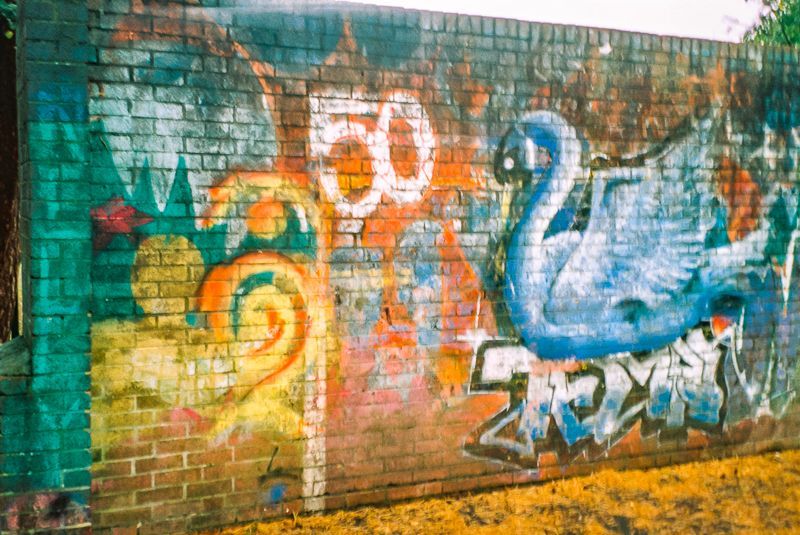
I sent the film off for processing and scan but no prints. All 36 shots had the right exposureThe amount of light that reaches the film (or camera sensor). It determines how light or dark an image is. The exposure of an image is determined by the aperture, shutter speed, and film speed (ISO). During exposure, the sensors or chemicals on the film in analogue models, are subjected to the light outside the camera for a certain time. More and the viewfinder is accurate. I imported the images into Lightroom and did a little bit of processing including straightening and cropping, dehaze, etc. The colours are great and I enjoyed the small amount of editing I did – it was not a chore.
Album – Fujifilm Zoom Date 145
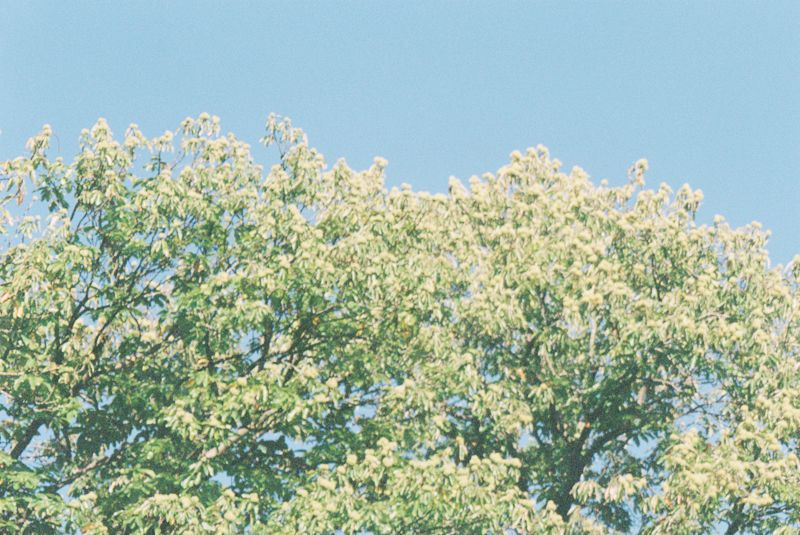
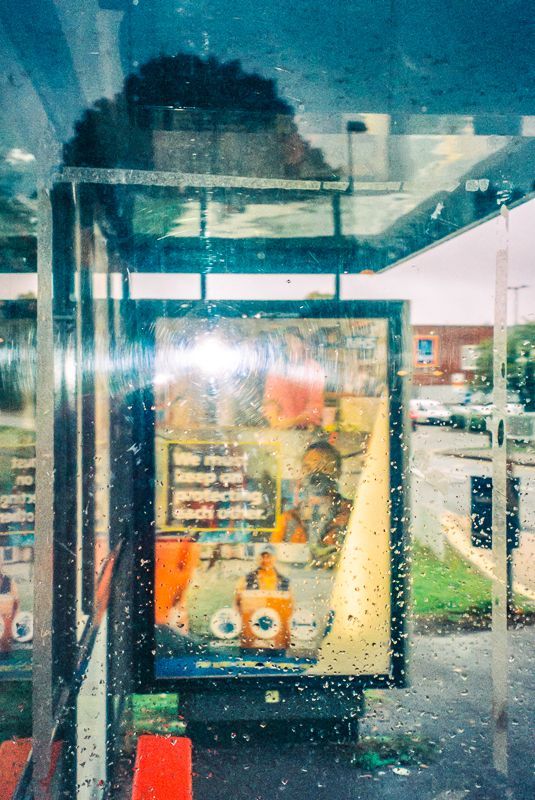
I have created a gallery of nearly all the photos I took with this camera. I am pleased with the results given that it was my first time using the camera. There are a few shots where the subject is not in focus – clearly operator error.


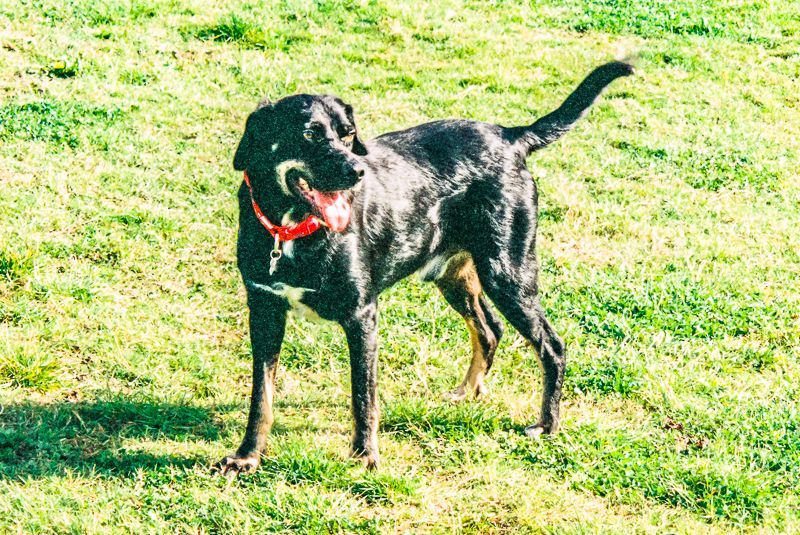




Check out this camera on Instagram #fujifilmzoomdate
Post Links
Used and new camera providers – RW Jemmett Photography Business Directory Film Processing and Supplies
Cameras and more from my Etsy Shop
[etsy-shop shop_name=”RWJemmett” section_id=”28458455″]
[etsy-shop shop_name=”RWJemmett” section_id=”28927529″]
[etsy-shop shop_name=”RWJemmett” section_id=”28814817″]