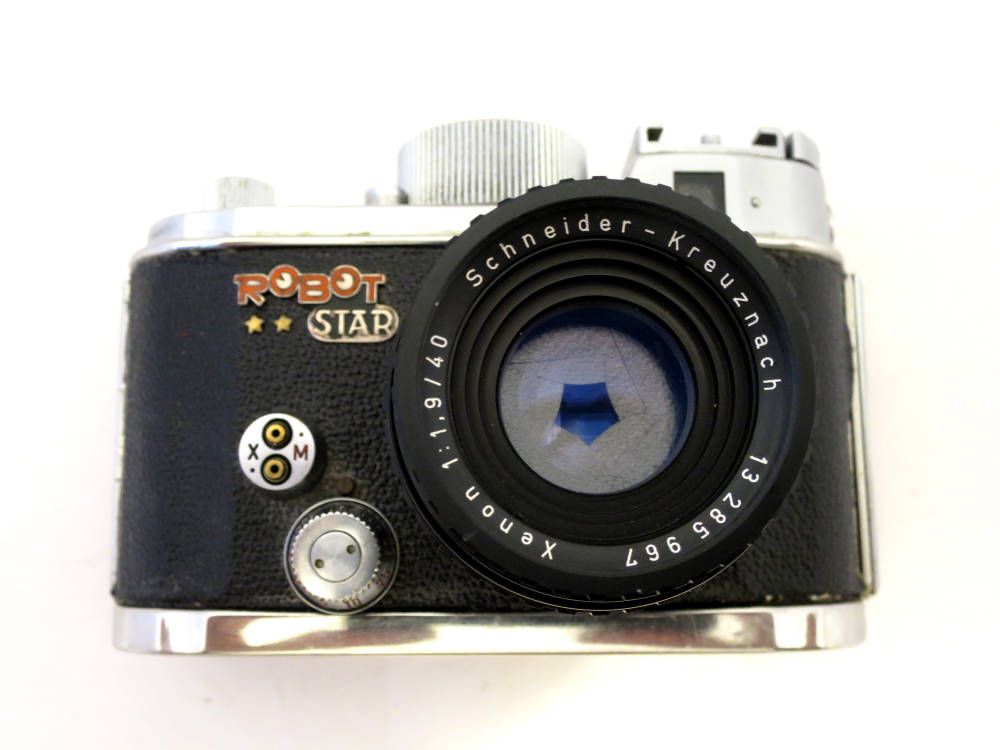
The Robots are a world apart. They are ultra-small, spring-wound 35mm film cameras with interchangeable lenses. To keep the cameras small, they chose the 24x24mm picture format. They are completely mechanical. They are designed for discreet, hyperfocal use, colour-points on the distance scale of each lens indicate the depth of the field according to the apertureThe aperture is basically a hole in the camera’s lens that lets light pass through it to the shutter and ultimately the film or censor. The aperture not only influences picture brightness but also regulates depth of focus. Most cameras are equipped with an iris aperture that can be freely adjusted or set according to pre-selected values. More set. Until the introduction of the Star II, they had an angle-viewer for more discretion. So the Robots played an important role in spying from the 30s to the 80s. There were silenced shutters available. And there were technical versions with big film canisters for the use in trafic radars.
A bit of general information: There are two main lines, the original Robot (24x24mm, screw-mount) and the Royal (24×36 mainly, but also 18×24 and 24×24, bayonnet-mount).
When the Robot I appeared in 1934, there was no standard 35mm cartridge yet, so they had their own feeding cassette (T) and a winding cassette (N). The II in 1938 had some improvements. The I and the early II have 26×0.75mm screw-mount which was then changed to 26x1mm until the end of production. All lenses can be mounted on 26×1 cameras, but the 26×1 lenses cannot be mounted on 26×0.75 cameras.
The IIa in 1951 is the first to accept standard film cartridges, but still has no rewind. The Star introduced the rewind, but still needs the N cassette for winding. There was a cheap version of the Star without rewind and angle-viewer called Junior.
The Star II (Vollautomat, which isn’t automatic at all) is a major redesign from the end of the 50s in 2 spring versions, the integrated 25 picture and the sticking out 50 picture version. It needs the NR cassette for winding. Both were renamed in the 60s as Star 25 and 50. They stayed in production until the 90s. The production ended with a limited edition collector’s model, the Star Classic in 1996.
The Royal is a different line, bigger, with bayonet mount, burst mode and a rangefinderA rangefinder is a focus mechanism that allows the user to calculate the distance of a subject through the convergence of two images. Cameras that use this mechanism are usually referred to as ‘rangefinders’. Rangefinder cameras were very popular in the 1950s, 60s and 70s. Single Lens Reflex (SLRs) and compact cameras largely replaced them in the 70s, 80s and 90s. What is not always appreciated is that rangefinders offer several tangible benefits over SLRs, not least in image quality. Indeed, many photographers would rate the Leica M Digital Rangefinder as one of the best cameras available today. More. The Royal II is a simplified version without burst mode and without a rangefinderA rangefinder is a focus mechanism that allows the user to calculate the distance of a subject through the convergence of two images. Cameras that use this mechanism are usually referred to as ‘rangefinders’. Rangefinder cameras were very popular in the 1950s, 60s and 70s. Single Lens Reflex (SLRs) and compact cameras largely replaced them in the 70s, 80s and 90s. What is not always appreciated is that rangefinders offer several tangible benefits over SLRs, not least in image quality. Indeed, many photographers would rate the Leica M Digital Rangefinder as one of the best cameras available today. More. The III is the last and most sought-after mode lof the series. They were made in 3 formats (with the same exterior body), 24×36, 24×24 and 24×18 (rare). When buying lenses for these, please note that all lenses for the 36 model fit the others, but 24 model lenses will not properly work on 36 models. The lenses are not marked, the 36 versions have 2 cut-out slots at the back, the 24 version only one. The Recorder is a technical variant of the Royal without a viewfinder. Some Recorder models have a simplified mount.
Features and Operation
The camera’s main features are:
- Various interchangeable lenses, hyperfocal setting
- Fast automatic shutterEither mechanical and/or electronic shutters are possible. Mechanical systems can use a leaf (or iris) shutter or curtain shutter. In digital cameras a third alternative is also possible: the electronic shutter. This works by activating and then deactivating the CCD so that no further light can be recorded, regardless of whether light is hitting the CCD. The shutter controls the exposure time, which can range from thousandths of a second to several minutes or more. Fast shutter speeds freeze action, slow speeds are more suited to stationary subjects. A tripod is recommended for slow exposure shots to avoid camera shake, or IBIS. More cocking and film wind via spring motor, up to 25 pictures per wind
- ShutterEither mechanical and/or electronic shutters are possible. Mechanical systems can use a leaf (or iris) shutter or curtain shutter. In digital cameras a third alternative is also possible: the electronic shutter. This works by activating and then deactivating the CCD so that no further light can be recorded, regardless of whether light is hitting the CCD. The shutter controls the exposure time, which can range from thousandths of a second to several minutes or more. Fast shutter speeds freeze action, slow speeds are more suited to stationary subjects. A tripod is recommended for slow exposure shots to avoid camera shake, or IBIS. More: fast rotary shutterEither mechanical and/or electronic shutters are possible. Mechanical systems can use a leaf (or iris) shutter or curtain shutter. In digital cameras a third alternative is also possible: the electronic shutter. This works by activating and then deactivating the CCD so that no further light can be recorded, regardless of whether light is hitting the CCD. The shutter controls the exposure time, which can range from thousandths of a second to several minutes or more. Fast shutter speeds freeze action, slow speeds are more suited to stationary subjects. A tripod is recommended for slow exposure shots to avoid camera shake, or IBIS. More, B 1/2 – 1/500, 2 flash contacts, Bulbs and X
- Size body: 72 x 111 x 40 mm, Weight : 482 g
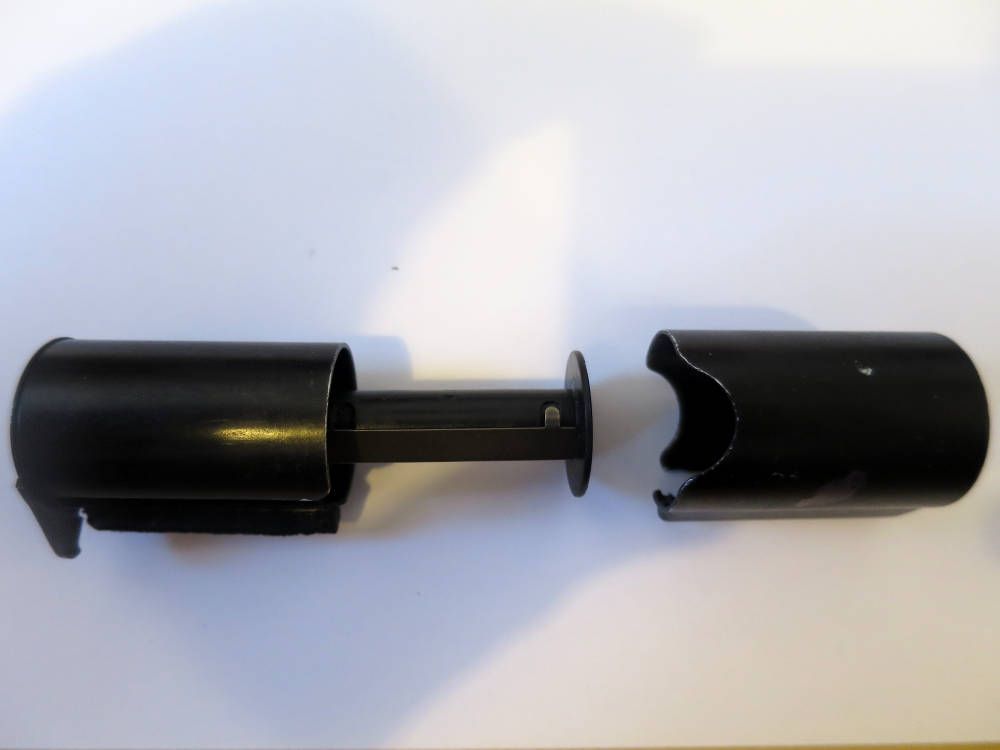
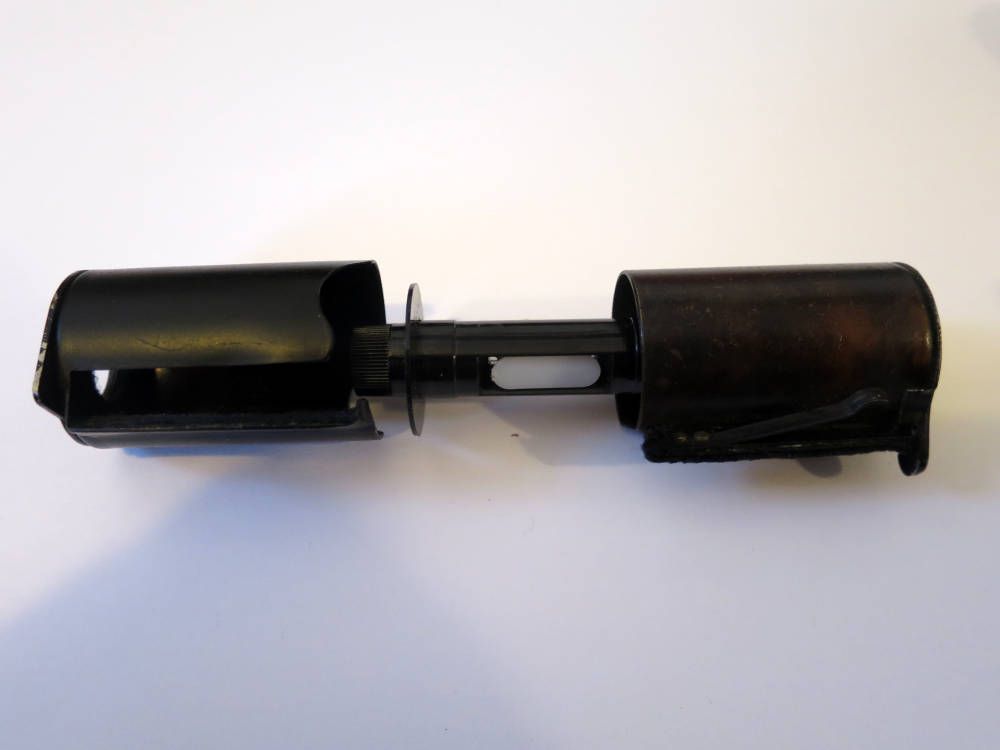
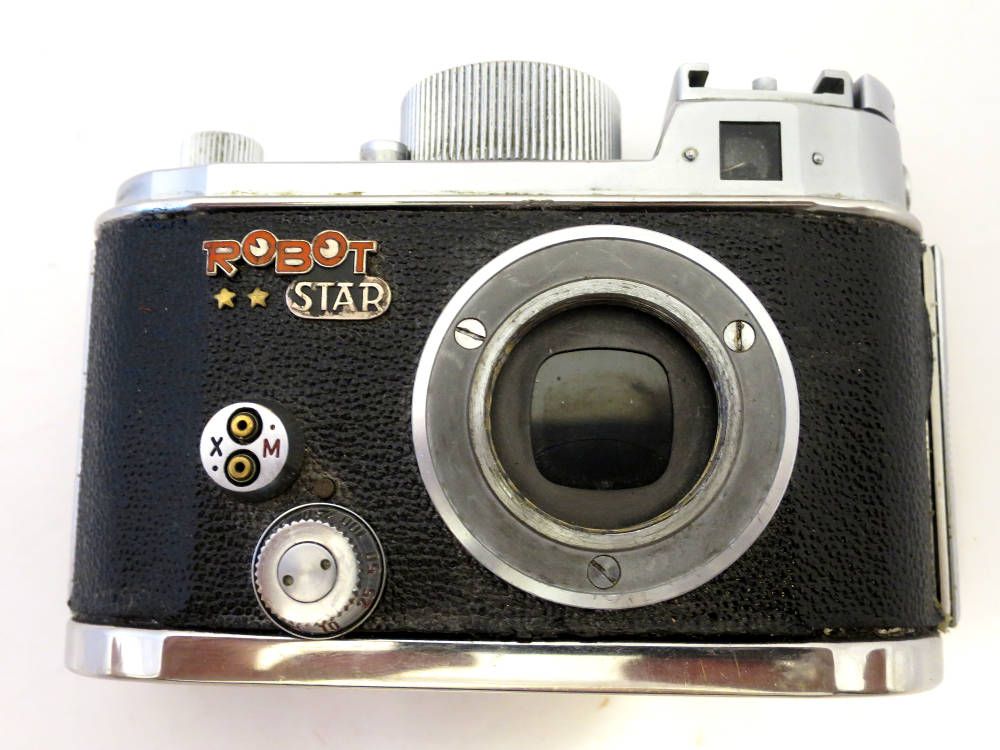
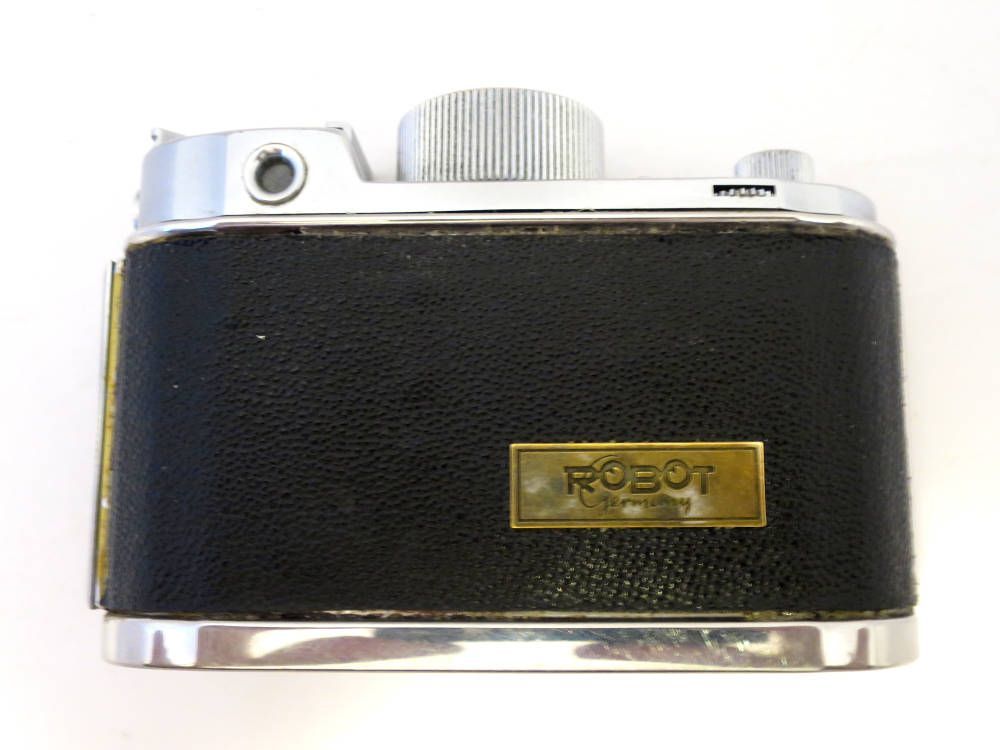

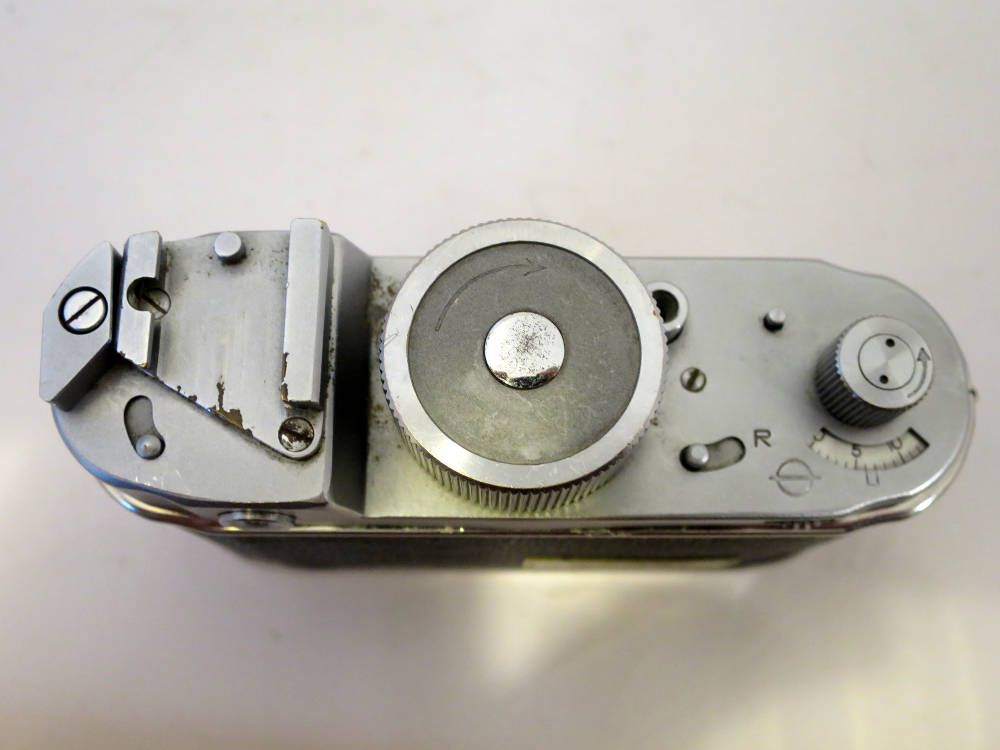
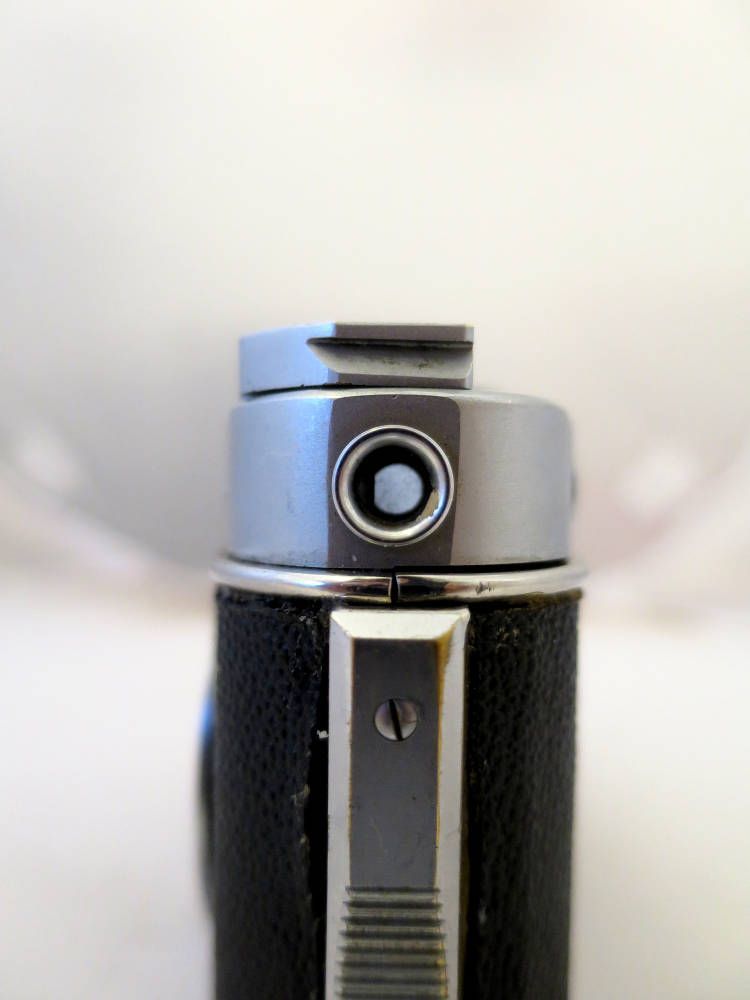
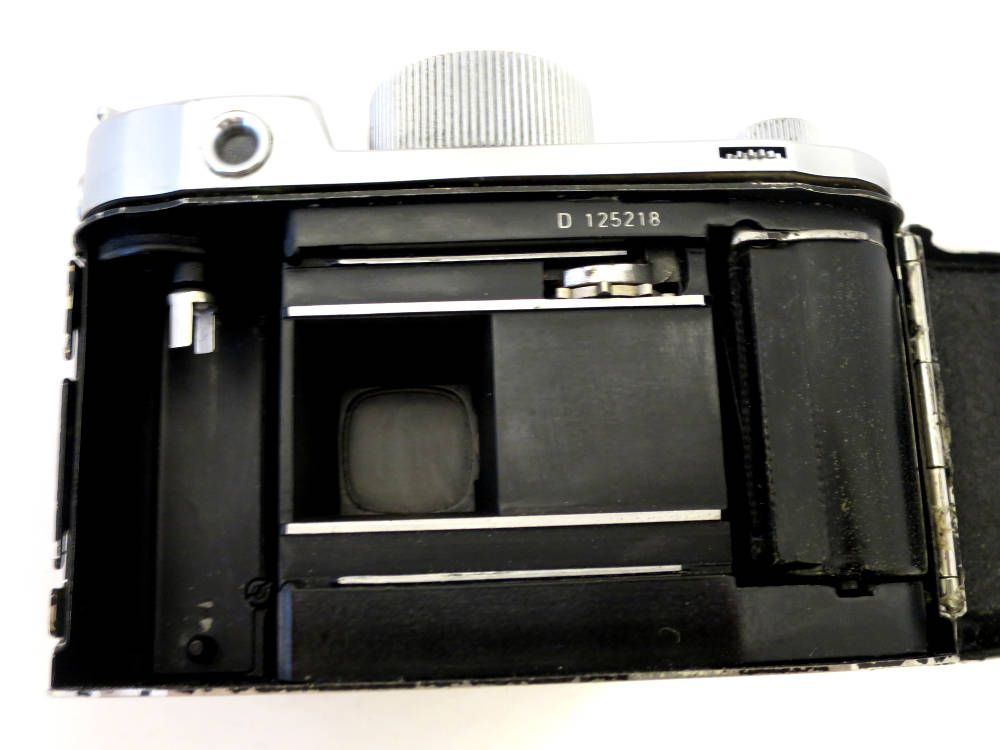

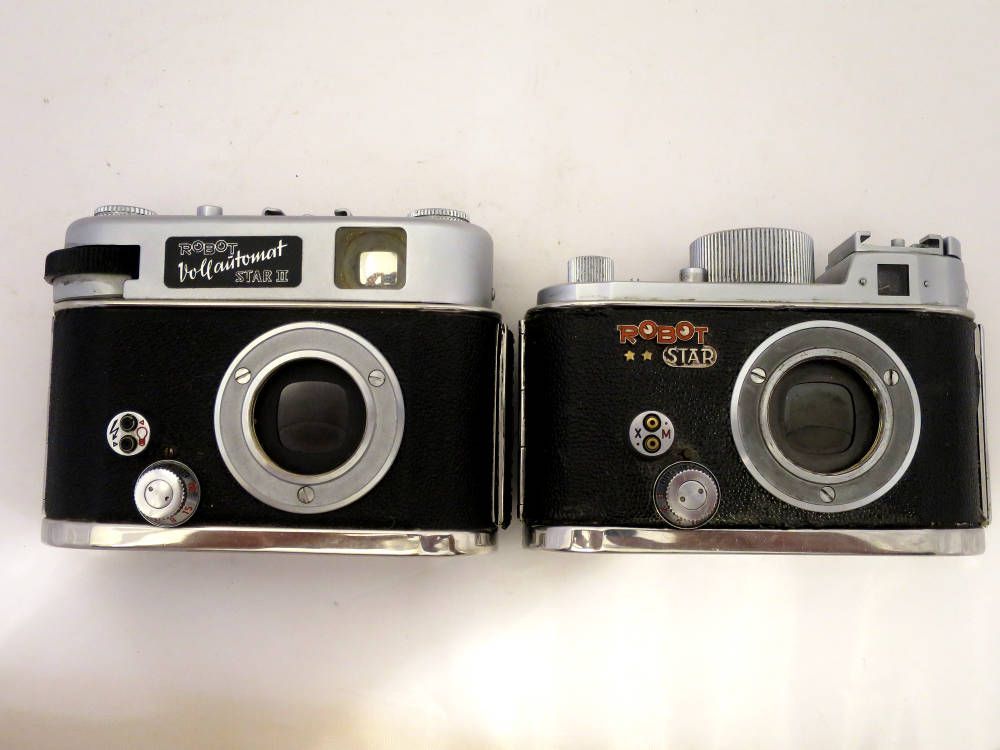
The Robot cameras are very small cameras with interchangeable lenses. They are extremely robust and fast, which makes them quite heavy. Film loading is a bit complicated, but once you are used to it, it’s fine. As proposed in the manual, it’s not a bad idea to do some exercise with old film first. You have to lift the wind button, remove the wind cassette, dismount the wind cassette and insert the film into the spool. Then the casette is re-mounted around the film tip and re-inserted. The film cartridge goes into the other side. The wind button has to be engaged into the wind spool and the film tightened. Then close the film compartment a action the shutterEither mechanical and/or electronic shutters are possible. Mechanical systems can use a leaf (or iris) shutter or curtain shutter. In digital cameras a third alternative is also possible: the electronic shutter. This works by activating and then deactivating the CCD so that no further light can be recorded, regardless of whether light is hitting the CCD. The shutter controls the exposure time, which can range from thousandths of a second to several minutes or more. Fast shutter speeds freeze action, slow speeds are more suited to stationary subjects. A tripod is recommended for slow exposure shots to avoid camera shake, or IBIS. More twice. Done.
The cassette has a big advantage: if you open the camera with the film in it, you only lose 2 photos. There are feeding cassettes for bulk film. Handling is easy otherwise. With some training and short shutterEither mechanical and/or electronic shutters are possible. Mechanical systems can use a leaf (or iris) shutter or curtain shutter. In digital cameras a third alternative is also possible: the electronic shutter. This works by activating and then deactivating the CCD so that no further light can be recorded, regardless of whether light is hitting the CCD. The shutter controls the exposure time, which can range from thousandths of a second to several minutes or more. Fast shutter speeds freeze action, slow speeds are more suited to stationary subjects. A tripod is recommended for slow exposure shots to avoid camera shake, or IBIS. More speeds you can shoot up to 4 photos per second. A 36 exposureThe amount of light that reaches the film (or camera sensor). It determines how light or dark an image is. The exposure of an image is determined by the aperture, shutter speed, and film speed (ISO). During exposure, the sensors or chemicals on the film in analogue models, are subjected to the light outside the camera for a certain time. More roll gives up to 55 photos. Spacing is very tight omn my cameras. I can sometimes have up to 64 photos from a 36 roll. The lenses are high quality lenses and designed for hyperfocal use. So the absence of a rangefinderA rangefinder is a focus mechanism that allows the user to calculate the distance of a subject through the convergence of two images. Cameras that use this mechanism are usually referred to as ‘rangefinders’. Rangefinder cameras were very popular in the 1950s, 60s and 70s. Single Lens Reflex (SLRs) and compact cameras largely replaced them in the 70s, 80s and 90s. What is not always appreciated is that rangefinders offer several tangible benefits over SLRs, not least in image quality. Indeed, many photographers would rate the Leica M Digital Rangefinder as one of the best cameras available today. More is only a minor issue.
Although the finder is very small, I prefer the Star to the Star II. It’s smaller, weighs less. The spring wind is easier to use for me. Both models are fine. With the 30mm lens (I love wider angles) it’s a good and fast combination for street photography if you want a mechanical camera. Hyperfocal setting and modern film make it easy to guess exposureThe amount of light that reaches the film (or camera sensor). It determines how light or dark an image is. The exposure of an image is determined by the aperture, shutter speed, and film speed (ISO). During exposure, the sensors or chemicals on the film in analogue models, are subjected to the light outside the camera for a certain time. More and distance and get beautiful photos.
The Robot cameras are fun to use. The lenses are very sharp. As they are small and rapid, they don’t attract any attention. Last, but not least, they are mechanical beauties….
Where to Find a Robot Star
Wiki
[rdp-wiki-embed url=”http://camera-wiki.org/wiki/Robot” toc_show=’0′ edit_show=’0′ infobox_show=’1′]
Check out this camera on Instagram #robotstar
Post References and Attribution
This post was created with information kindly contributed by 135Compact
Post Links
Used and new camera providers – RW Jemmett Photography Business Directory Film Processing and Supplies
Cameras and more from my Etsy Shop
[etsy-shop shop_name=”RWJemmett” section_id=”28458455″]
[etsy-shop shop_name=”RWJemmett” section_id=”28927529″]
[etsy-shop shop_name=”RWJemmett” section_id=”29333601″]
[etsy-shop shop_name=”RWJemmett” section_id=”28814817″]
One thought on “Robot Star, a Square Format 35mm Camera, how Strange”
Comments are closed.