
The Purma Camera Book
The Purma Camera Book: A Vintage Camera Guide – Using and Buying Purma Cameras. Read more about the Purma Camera Book
“I just received my Purma Camera Book and was pleased to find that it successfully integrates the history and unique mechanics of the three Purma models with contemporary photographic reality, technique and technology. Well done!
Thank you very much. LR – Rochester, NY USA”
Purma Book Contributors and Links
Mike O’Connell – Art Deco Cameras
James Rod
Tony Platt
Matthew Davidson
Neal Wellons
Adrian Gray
Maurice Fisher
Adrian Gray
More about Purma Cameras
Early Photography – Purma Speed
Early Photography – Purma Special
Early Photography – Purma Plus
Where to buy a Purma Camera
Film, Film Processing and More
Film Process and Supply (Directory of Companies)
How to create a 127 film from 120 roll film
Producing 127 Film from any 120 Film
Film Cutter Kit for 127 film: a complete kit that cuts 120 film and rolls it to 127 spool
Using Expired Film
Using 35mm Film in a Brownie 127 to Get Exposed Sprockets
Purma Cameras FAQ
Where can I buy 127 film?
Where can I buy the Purma Camera Book?
Do you intend to write more vintage camera books?
I found something that needs to be updated in the Purma Camera book
I ordered the Purma Camera book, why does it take several days before it is dispatched?
Do you buy and sell (Purma) Cameras?
Which Purma Camera is the most valuable?
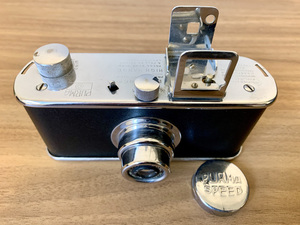
I have seen a Purma camera without a lens cap, should I still buy it?
Do you buy and sell cameras?
Purma Patents
Social Media and More
If you are interested in Purma Cameras we would love you to join our Flickr Group. You will meet other people that ate interested in the cameras, see their images and you can also join the discussion pages. Joining Flickr is free.
RW Jemmett Products
Purma Camera Patent. Collection of Four Digital Photos to Download. 1938 Patent. Orange, Blue, Black and Monochrome
My Film Captured Photos for Download on Etsy

Purma Special on Instagram #purmaspecial
Purma Plus on Instagram #purmaplus
Photos from the Purma Flickr Group
Flickr API error: Invalid API Key (Key has invalid format)
Purma Books and more from Richard W Jemmett
-
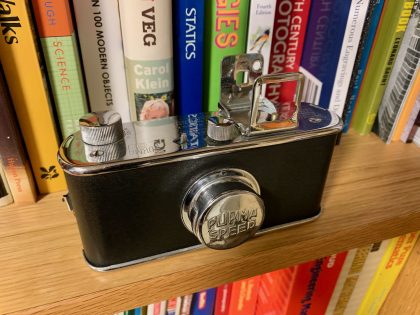
 Purma Speed 127 camera – 1936
 -
The Purma Camera Book: A Vintage Camera Guide – Hardback
-
Purma Camera Patent Postcard
-
Purma Plus – 1950s Aluminium 127 Film Camera (not tested)
-
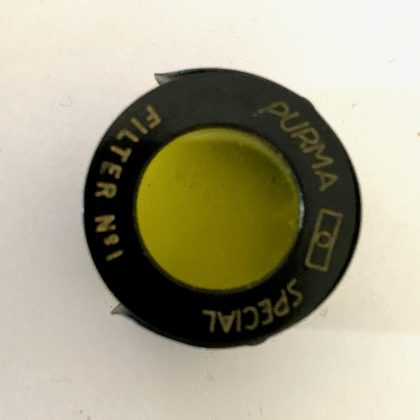
Purma Special Filter 0 Filter Number 1, Yellow.
-
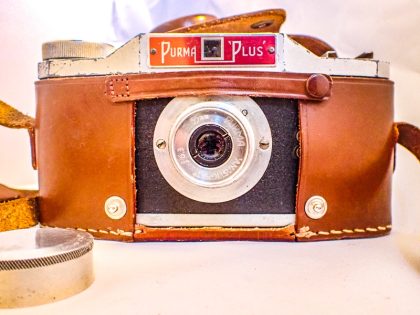
Film Tested Purma Plus Camera with Leather Case. Plus The Purma Camera Book.
-
Purma Plus Camera Manual Download. Instructions in PDF for Instant Digital Download.
-
The Purma Camera Book: A Vintage Camera Guide – Using and Buying Purma Cameras
-
Photography Log Book: For 35mm Film Cameras




One thought on “Purma Cameras – Resources and Links for The Purma Camera Book”
Hello,
I am certainly late in pinpointing the noticeably uneven exposure made by Purma cameras, a feature that came to my attention only recently, just by looking in other people photos in various web pages, particularly in sunny shots (presumably exposed at the camera’s “FAST” shutter speed): the problem is typically manifested as overexposure of the bottom picture part, gradually turning to an underexposed upper part.
I believe that this should seen as an unfortunate intrinsic design fault of this rather unique and strange curved focal plane shutter, attributed to the fact that on releasing the shutter ITS TWO METAL PLATES START AN ACCELERATED MOVEMENT AT THE SAME MOMENT, WHILE MAINTAINING A SLIT OF CONSTANT WIDTH BETWEEN THEM. So, the acceleration of the two metal plates across the film gate results in progressively lower exposure times for the currently exposed film strips behind.
Contrary to the same nature of accelerated movement of their spring-loaded curtains in typical focal-plane shutters, the above uneven exposure problem is not present, in either mechanical or electronic ones, because DUE TO THE VERY FACT THAT THE SECOND CURTAIN STARTS MOVING LATTER, THE SLIT BETWEEN THE TWO CURTAINS GRADUAL INCREASES DURING THE EXPOSURE TIME. So, the combined result of a) the accelerated movement of curtains, and b) the simultaneous gradual increasing of the curtains slit during their travelling, is that the sequential exposure of each film strip behind the curtains is here kept equal!
Comments are closed.